
TrendForce Predicts Flash Memory Supply Shortage Will End in Late 2027
July 21, 2026
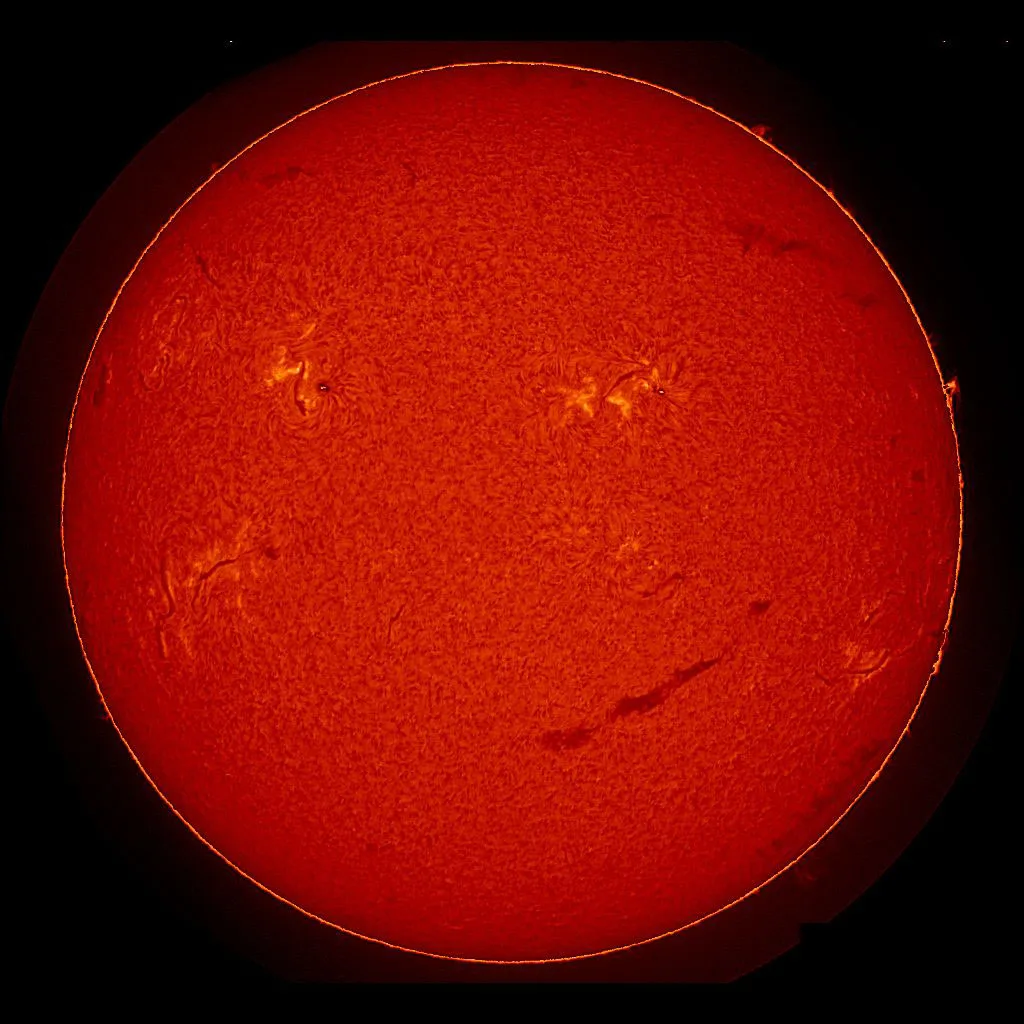
Researchers at the Space Research Institute of the Russian Academy of Sciences have recently captured an unusual solar phenomenon where the Sun appeared to take the form of an enormous smiley face. Measuring approximately 1.5 million kilometers across, this remarkable visual impression of the Sun was observed looking directly toward Earth.
The event was reported on February 13 and has drawn attention due to the familiar patterns appearing on the solar surface that resembled a face with a broad smile. This occurrence highlights how human brains are naturally inclined to recognize familiar shapes and faces in various patterns, a cognitive tendency known scientifically as pareidolia.
The Sun’s dynamic surface, marked by regions of intense magnetic activity, sunspots, and solar flares, can occasionally produce formations that create striking images when observed through specialized instruments. In this instance, the pattern created on the Sun’s visible surface was reminiscent of a cheerful emoji-like expression—a resemblance that requires little imagination to identify.
The observation was made possible by high-resolution solar imaging technologies operated at the Laboratory of Solar Astronomy, a specialized division within the Space Research Institute. These instruments monitor and analyze solar activity to better understand the behavior and impact of our star on the solar system.
While the smiley face formation does not influence solar behavior or its effects on Earth directly, it serves as a vivid example of how natural solar phenomena can spark public interest and awareness about ongoing solar activity. Observations like this provide scientists with more data to study the highly complex and ever-changing nature of the Sun.
The Russian space research community continues to contribute valuable insights into solar physics, leveraging both ground-based and space-borne observatories to enhance the global understanding of space weather and its potential implications.
As our closest star, the Sun’s activity cycle plays a crucial role in shaping space weather conditions that affect satellite communications, navigation systems, and even power grids on Earth. Hence, continuous monitoring and analysis of solar phenomena remain critical for predicting and mitigating adverse effects from solar storms.
Russian scientists report the Sun recently resembled a giant smiley face roughly 1.5 million kilometers wide, facing Earth directly.