App Store Sees Surge in New Apps Amid Growth of No-Code Platforms in Early 2026
July 21, 2026
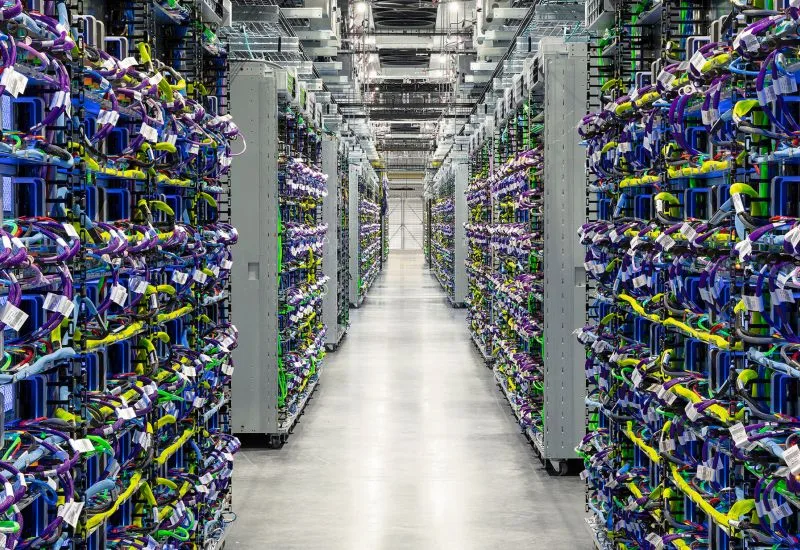
The landscape of artificial intelligence hardware is witnessing a shift as Google positions itself as a formidable contender against established players like Nvidia. Traditionally, Nvidia’s main competitors in the AI accelerator market have been AMD and, to some extent, Intel. However, Google’s advancements in custom Tensor Processing Units (TPUs) have introduced a new dynamic to the competition.
Google has long utilized its own TPUs to accelerate machine learning workloads within its extensive cloud and AI research infrastructure. These custom processors are designed specifically to handle AI computations more efficiently than general-purpose GPUs typically offered by Nvidia. The company’s ongoing development and refinement of these TPUs underscore an increased ambition to capture a more significant share of the AI chip market.
While AMD and Intel have remained the most commonly recognized challengers to Nvidia’s dominance, Google’s move to develop proprietary hardware marks a strategic shift from being mainly a software and services giant toward becoming a key player in hardware innovation. This vertical integration enables Google to tailor its AI chips to its specific workloads and optimize performance for machine learning tasks.
Despite Google’s substantial expertise and resources, entering the highly competitive AI chip sector presents notable challenges. Nvidia has established a strong ecosystem around its GPUs, including widespread developer support, mature software frameworks, and robust hardware performance across various AI tasks. Matching this ecosystem requires significant investment and time to gain comparable traction among developers and enterprise users.
Moreover, the AI accelerator market demands cutting-edge semiconductor manufacturing capabilities and the ability to iterate rapidly on chip designs. Historically, this has posed hurdles for new entrants aiming to keep pace with rapid innovation cycles, production scale, and cost-efficiency measures.
Nevertheless, Google’s existing infrastructure and deep AI expertise offer a potentially advantageous foundation. The company already deploys TPUs extensively in its own operations, which provides practical insights into real-world AI workloads that can inform future chip development. This hands-on experience enables Google to fine-tune performance and power efficiency in ways that general-purpose chip manufacturers may find challenging.
Industry analysts are closely watching how Google leverages its TPU advancements to compete against Nvidia and others. While the path ahead involves intense competition and technological hurdles, the emergence of Google as a serious competitor reflects the growing importance of AI-specific hardware tailored for modern machine learning applications.
As AI technologies continue to proliferate across sectors, the demand for efficient and scalable AI accelerators is intensifying. This market evolution contributes to a diversification of players, potentially leading to innovation breakthroughs and new industry standards. Google’s ascent in AI chip production underscores the shifting competitive dynamics and highlights the ongoing transformation of the semiconductor landscape driven by artificial intelligence.
Google’s development of custom TPU processors signals its rising ambitions to challenge Nvidia’s dominance in AI acceleration hardware.