App Store Sees Surge in New Apps Amid Growth of No-Code Platforms in Early 2026
July 21, 2026
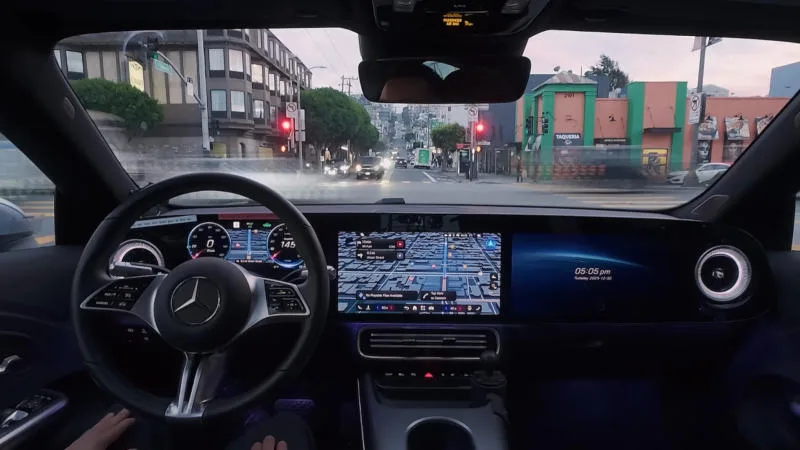
Nvidia is positioning itself as a rising competitor in the autonomous vehicle sector, targeting established players such as Tesla and Waymo. The chipmaker’s automotive division has revealed a strong belief in the capabilities of its self-driving system, demonstrated by a unique internal trust test.
<pApproximately every six months, Xinzhou Wu, head of Nvidia's automotive unit, invites the company's CEO Jensen Huang to experience a drive using Nvidia’s autopilot system. This invitation is extended only if Wu remains confident in the performance and safety of the autonomous technology at that time. The practice underscores the internal assurance in the system’s readiness and maturity.
Nvidia’s efforts come at a moment when the autonomous driving market is growing increasingly competitive, with Tesla and Waymo continuing to lead and innovate. Nvidia, known primarily for its graphics processing units (GPUs) and AI computing platforms, leverages its expertise in artificial intelligence and powerful computing to build an advanced autonomous driving stack.
While specific technical details of Nvidia’s system were not disclosed, the company’s strategic approach involves integrating its AI computing power with automotive hardware and software to deliver robust self-driving capabilities. This challenge to existing market leaders signals Nvidia’s broader ambition to expand beyond chip manufacturing into becoming a key player in vehicle autonomy software and systems.
The broader autonomous vehicle industry is rapidly evolving, with technological advancements focusing on safety, reliability, and real-world usability. Nvidia’s initiative to test its system under real driving conditions with top executives is a notable sign of its pursuit to refine and validate its autonomous driving technology.
As Nvidia steps up its efforts in this competitive arena, industry observers will be watching how the company’s combined strengths in AI and automotive technologies influence its position against Tesla’s full self-driving and Waymo’s autonomous taxi services. This emerging rivalry could accelerate innovation and deployment timelines across the self-driving car landscape in the coming years.
Nvidia’s automotive division plans to challenge Tesla and Waymo with its advanced self-driving system, highlighting its confidence in autonomous capabilities.