App Store Sees Surge in New Apps Amid Growth of No-Code Platforms in Early 2026
July 21, 2026
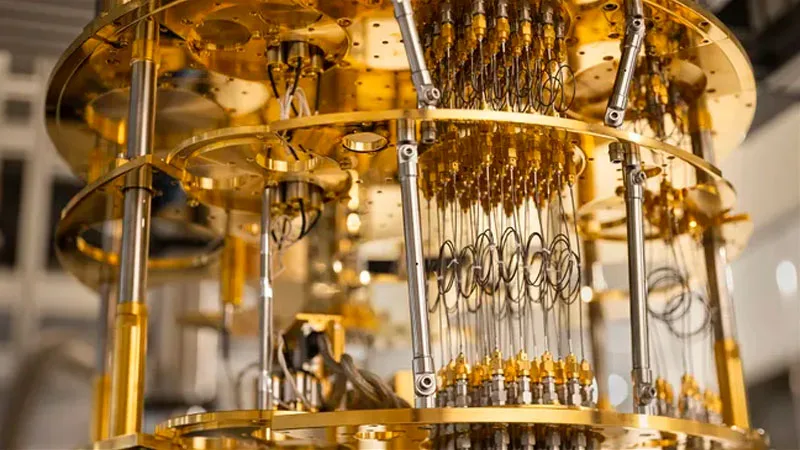
Scientists in China have developed a new rare-earth alloy that achieves ultra-low temperatures necessary for quantum processor cooling, eliminating the reliance on the scarce helium-3 isotope. This breakthrough leverages a material composed primarily of europium, cobalt, and aluminum, marking a significant advancement in cryogenic technology.
Quantum processors require extremely low temperatures to maintain qubit coherence and function effectively. Traditionally, cooling approaches have depended on helium-3, a rare isotope with limited availability that poses supply challenges for scaling quantum computing technologies. Addressing this limitation, Chinese researchers have engineered a europium-based alloy—specifically EuCo2Al9—to serve as the cornerstone of a compact solid-state refrigeration module.
This solid-state cooler operates without any moving parts, enhancing its reliability and potential for integration into quantum systems. When tested, the cooling performance surpassed initial expectations, reaching temperatures close to -273°C (near absolute zero). This outcome represents a record-setting achievement for solid-state cooling devices.
The use of this europium-cobalt-aluminum alloy in thermal management systems for quantum processors offers promising implications. By enabling such near-absolute-zero cooling without helium-3, the technology could alleviate supply constraints and promote wider adoption of quantum computing infrastructure.
Though further research and development are necessary to transition this innovation from experimental conditions to commercial application, the progress underscores the importance of novel materials in overcoming longstanding technical barriers in quantum technology.
As quantum computing continues to advance, improvements in cooling solutions like this one will play a critical role in making the technology more accessible and scalable, potentially accelerating the timeline for practical quantum computing implementations.
A novel europium-based alloy enables ultra-low temperatures near -273°C without helium-3, advancing quantum processor cooling technology.