
TrendForce Predicts Flash Memory Supply Shortage Will End in Late 2027
July 21, 2026
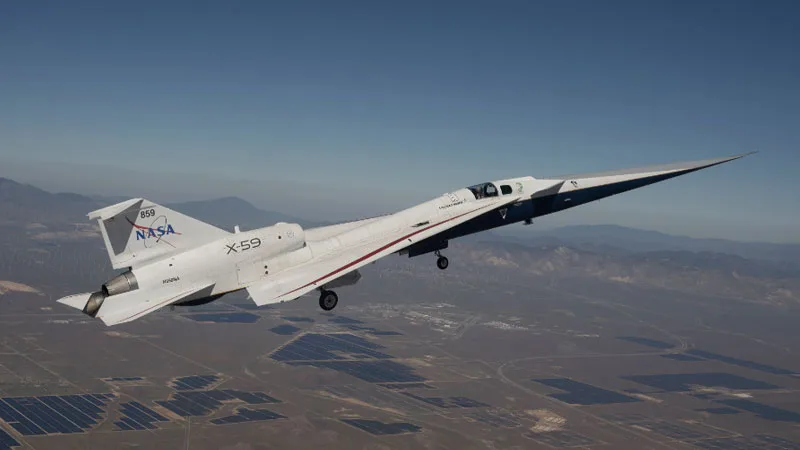
NASA’s experimental supersonic aircraft, the X-59, successfully completed its second flight on March 20, 2026. The test took place at Edwards Air Force Base, near the Armstrong Flight Research Center in California. The flight marked another important milestone in NASA’s ongoing Quesst program.
The Quesst initiative aims to demonstrate the feasibility of supersonic flights over land without generating disruptive sonic booms. Such advancements could pave the way for new regulations and commercial applications by making high-speed travel quieter and more community-friendly.
The second flight of the X-59 was relatively brief but yielded valuable data to inform further development. Taking off at 10:54 a.m. local time from Edwards Air Force Base, the aircraft’s performance during this test provided insights that will guide subsequent testing phases and refinement of design features focused on noise reduction.
By focusing on minimizing the sonic boom, NASA’s X-59 seeks to overcome one of the critical barriers preventing routine supersonic travel above land. Current supersonic jets are limited to over-water flights because of the loud noise produced at speeds exceeding Mach 1. The data collected from flights like this are essential to validating the technology and influencing future policy.
NASA officials have emphasized the importance of these incremental flight tests in demonstrating how aerodynamics and engineering can combine to reshape supersonic transportation. While specific technical details and timelines have not been disclosed, the continued progress of the X-59 illustrates ongoing commitment to revolutionizing air travel.
The successful execution of this second flight brings NASA closer to achieving quieter, faster air travel that could transform commercial aviation by reducing travel times without disturbing communities below flight paths.
NASA’s X-59 completed its second test flight from Edwards Air Force Base, advancing efforts to enable quiet supersonic travel over land.