Advancements in CFET Technology Promise Faster, Smaller, and More Reliable Semiconductor Transistors
July 21, 2026
In the realm of space exploration, the most dramatic setbacks are often attributed to rocket engine failures or hardware malfunctions. Yet, history shows that some of the most expensive mission failures have actually stemmed from seemingly minor software errors. These glitches, embedded deep within complex code, have turned multibillion-dollar projects into losses and called into question the evolving relationship between mathematics, programming, and spaceflight.
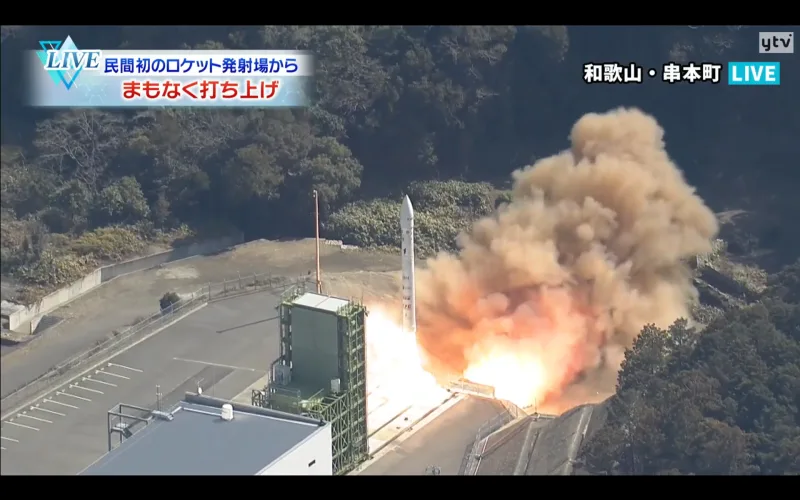
One notable example is the ill-fated case of Japan’s Kairos satellite, which never reached operational success due to a critical software malfunction. Similar stories unfold within more prominent missions such as Europe’s Ariane 5 rocket and NASA’s Mars Climate Orbiter. Each incident underscores how even a solitary line of flawed code can trigger catastrophic outcomes.
The Ariane 5 disaster is particularly illustrative of this phenomenon. Shortly after liftoff, the rocket veered off course and self-destructed. Investigations revealed that the failure was caused by a data conversion bug—a simple oversight where a 64-bit floating-point number was incorrectly cast into a 16-bit signed integer, leading to an overflow error. This failure was not mechanical but mathematical, a lapse in software engineering that resulted in a loss valued at billions of dollars.
Similarly, NASA’s Mars Climate Orbiter fell victim to a mismatch between metric and imperial units, a miscalculation that led to the spacecraft entering Mars’ atmosphere at an incorrect trajectory and being destroyed. This type of programming inconsistency highlights the critical importance of rigorous standards and communication protocols in software development for space missions.
These incidents illustrate a larger trend: as rockets and spacecraft grow more complex, the margin for error in software engineering narrows drastically. The future of space exploration increasingly depends less on the physical hardware and more on the computational accuracy behind it. Developers and engineers must leverage advanced mathematical precision alongside robust programming practices to ensure mission success.
With space agencies and private companies pushing the envelope in interplanetary exploration, leveraging artificial intelligence and machine learning, the stakes surrounding software reliability only increase. Efforts to minimize human error through automation introduce new challenges that must be addressed with equally sophisticated mathematical frameworks and validation techniques.
Ultimately, these costly historical failures serve as cautionary tales about the pivotal role of software integrity in spaceflight. As humanity looks toward ambitious missions to Mars, the Moon, and beyond, it is clear that mastering mathematical rigor and eliminating even the smallest code errors will be as vital as any rocket engine.
Small software mistakes have caused some of the costliest failures in space exploration, raising questions about the future reliance on mathematics over hardware.