App Store Sees Surge in New Apps Amid Growth of No-Code Platforms in Early 2026
July 21, 2026
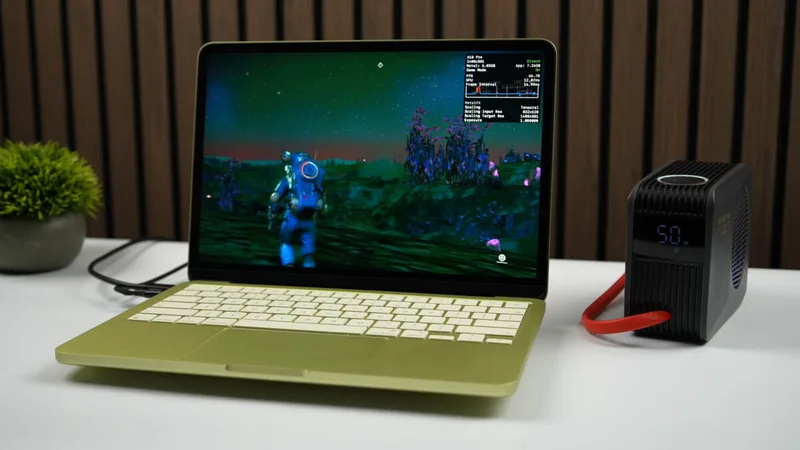
In a recent hardware experiment, engineers outfitted Apple’s MacBook Neo, powered by the A18 Pro processor, with a liquid cooling system. The aim was to explore the impact of enhanced thermal management on the device’s performance, particularly in demanding software environments.
The results of the experiment revealed a notable improvement in performance with the addition of liquid cooling. Specifically, when running the space exploration game No Man’s Sky, the MacBook Neo’s frame rate approximately doubled compared to its standard thermal configuration. This significant boost underscores the role that cooling solutions play in maximizing the capabilities of mobile processors.
Liquid cooling, typically found in high-end gaming desktops and workstations, enables more effective heat dissipation than conventional air cooling. By preventing the A18 Pro chip from throttling under intense workloads, it maintains higher clock speeds and enhances sustained performance during resource-intensive tasks.
While Apple’s MacBook line is known for its slim profile and efficient thermal management, this experiment suggests there is potential for further performance improvements if more aggressive cooling methods are employed. Such enhancements could open new possibilities for the MacBook series in gaming and professional creative applications where thermal constraints limit computational output.
Details on the specific liquid cooling setup used in the test were not disclosed, and there is no indication that Apple plans to integrate similar solutions into future MacBook models. However, this demonstration serves as a proof of concept that innovative cooling adaptations can substantially elevate laptop performance, especially for the advanced architectures like the A18 Pro.
The broader implication of this experiment is the growing interest in pushing the envelope of mobile computing power through thermal engineering. As software demands increase and chip designs become more complex, balance between heat management and performance will remain a pivotal factor in the development of next-generation laptops.
For now, the MacBook Neo’s experiment with liquid cooling highlights both the progress and the challenges in merging high performance with portability, potentially guiding future innovations in laptop design and user experience.
Adding liquid cooling to the MacBook Neo with A18 Pro chip significantly enhanced performance, doubling frame rates in No Man’s Sky.