Advancements in CFET Technology Promise Faster, Smaller, and More Reliable Semiconductor Transistors
July 21, 2026
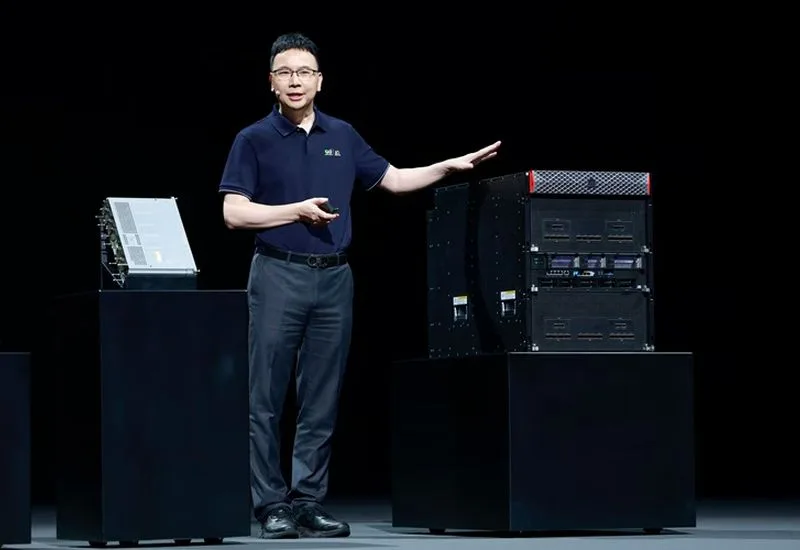
Huawei Technologies, which has been subject to U.S. sanctions since 2019, is intensifying its efforts to broaden the range of in-house developed components with a strategic focus on its AI accelerator series, including the Ascend 950PR. This move reflects the company’s commitment to advancing its computing hardware ecosystem amid ongoing restrictions on supply chains.
The Ascend 950PR accelerator, designed to facilitate high-performance computational tasks, has seen notable interest from Chinese developers. This growing demand has led Huawei to enhance its compatibility suite, most notably by integrating support for Nvidia’s widely used CUDA programming platform.
By enabling Nvidia CUDA compatibility, Huawei aims to bridge the gap between its native hardware solutions and the extensive ecosystem built around Nvidia’s software framework. CUDA remains a dominant platform for parallel computing tasks in artificial intelligence, machine learning, and scientific research. Huawei’s decision to incorporate support for CUDA suggests a strategic push to make the Ascend 950PR more accessible and appealing to developers accustomed to Nvidia’s tools.
This compatibility effort could help mitigate some of the fragmentation challenges associated with AI acceleration, since developers may now shift more seamlessly between hardware platforms without the need for complete software redevelopment. Such an approach not only expands the usability of Huawei’s accelerator in existing workflows but also positions the company to capture a larger share of the domestic market where Nvidia CUDA has significant traction.
Reports indicate that the Ascend 950PR will see production volumes reaching approximately 750,000 units within the current year. This scale suggests Huawei’s confidence in the product’s market reception and its broader ambitions to strengthen domestic capabilities while potentially substituting foreign alternatives in critical AI computing areas.
Huawei’s move reflects a broader trend among semiconductor companies to improve cross-platform interoperability as a means to gain developer support and accelerate adoption rates in a competitive AI hardware landscape. Although further details on pricing, specific performance metrics, and international availability were not disclosed, the emphasis remains clearly on rapid deployment and integration within China’s expanding AI sector.
As AI workloads continue to grow in complexity and volume, accelerators like the Ascend 950PR are expected to play a pivotal role in enabling faster, more efficient processing. Huawei’s integration of Nvidia CUDA compatibility is a significant step towards fostering a versatile and flexible AI hardware environment, aimed at consolidating its position in a market characterized by intense technological competition and geopolitical challenges.
Huawei enhances Ascend 950PR accelerators with Nvidia CUDA support, aiming for large-scale deployment and broad adoption this year.