App Store Sees Surge in New Apps Amid Growth of No-Code Platforms in Early 2026
July 21, 2026
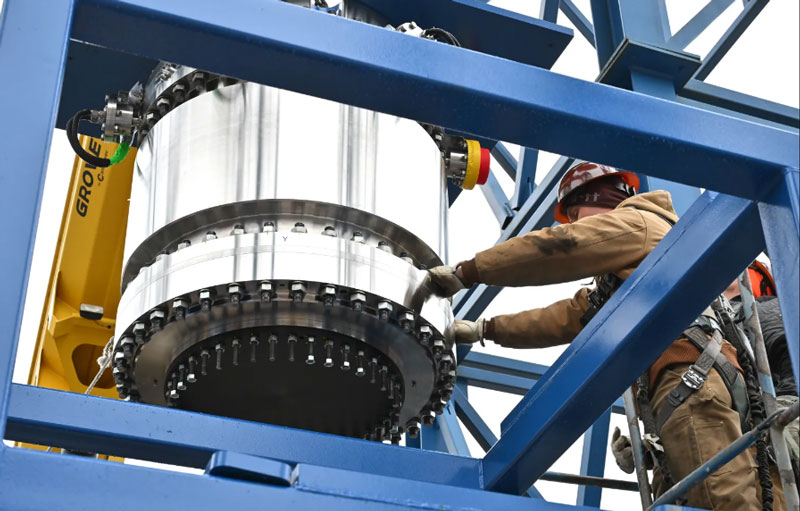
NASA has resumed testing of a nuclear rocket engine prototype for the first time in more than six decades, marking a significant step in advancing space propulsion technology. This effort aims to develop engines that can dramatically improve mission speed, range, and payload capacity for future deep space exploration.
During 2025, NASA conducted tests on the prototype engine, although the trials did not include fueling the system with nuclear material. The testing phase focused on validating core engine components and design concepts that have been dormant since the 1960s. The renewed work reflects progress toward realizing nuclear propulsion that could support spacecraft traveling farther and faster than conventional chemical rockets, with the added benefit of carrying more powerful scientific instruments and communication equipment.
The nuclear thermal propulsion system under evaluation utilizes nuclear reactions to generate heat, which would then produce thrust more efficiently than traditional engines. This type of technology holds potential to significantly shorten transit times to distant destinations like Mars or outer planets, while enabling missions with increased scientific return due to larger onboard payloads.
NASA’s renewed interest in nuclear rocket engines reconnects with earlier mid-20th-century efforts to harness nuclear power for space travel, a concept that had been shelved for decades. The current testing phase signals renewed confidence in the feasibility and advantages of nuclear propulsion for future space exploration programs.
Nuclear thermal propulsion development aligns with growing interest in next-generation space transportation technologies across both government agencies and private aerospace companies. Various organizations are exploring alternative propulsion approaches including nuclear and electric options to overcome the limitations of current chemical rockets. Advancements in this field are expected to play a key role in enabling sustainable human and robotic missions farther into the solar system.
Moving forward, NASA plans to continue testing and refining the nuclear engine prototype, with future milestones likely focusing on fuel integration and full system validation. These developments will be critical to the eventual deployment of nuclear-powered spacecraft designed to extend humanity’s reach across the solar system.
NASA has revived nuclear rocket engine testing with a new prototype, potentially enabling faster, longer space missions with enhanced capabilities.