App Store Sees Surge in New Apps Amid Growth of No-Code Platforms in Early 2026
July 21, 2026
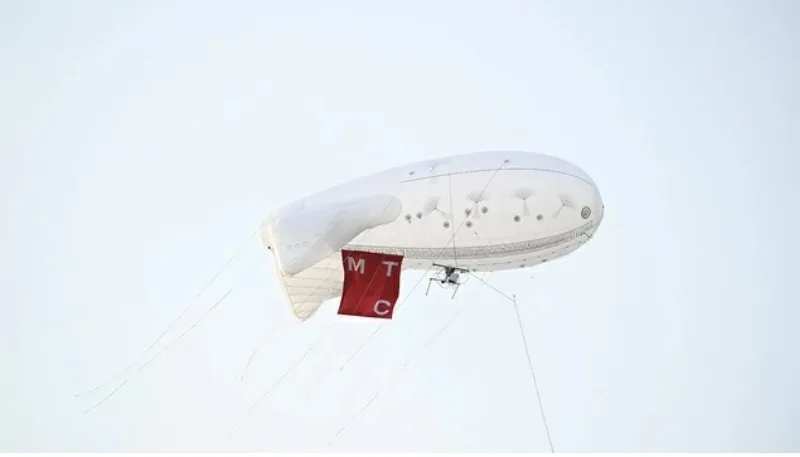
Russian telecommunications operator MTS has introduced a novel approach to mobile connectivity by deploying a cellular base station on an airborne platform. The company has tested this solution using a balloon-based system, also known as an aerostat, to provide wireless coverage in areas that traditionally lack access to mobile networks.
The concept leverages an aerostat, a buoyant balloon that relies on lighter-than-air gas to remain aloft, a technology that dates back to the 18th century. By integrating a base station directly on the flying object, MTS aims to extend cellular signals across regions where constructing terrestrial towers is either impractical or cost-prohibitive.
This method holds potential to improve connectivity in vast, remote, and sparsely populated locales, many of which suffer from inconsistent or nonexistent mobile service. Operating above ground level offers the advantage of broader signal coverage with fewer physical infrastructure demands on the terrain below.
The test deployment is currently underway in Volsk, within Russia’s Saratov region. While technical details and performance outcomes have not been extensively disclosed, the initiative marks a significant step for Russian telecom providers in exploring alternative means to address coverage gaps.
Employing aerostat technology for communication networks reflects growing global interest in airborne solutions to telecommunications challenges. Similar concepts have seen experimental use in various countries, aiming to complement or temporarily replace traditional ground-based base stations, especially in hard-to-reach environments.
MTS being the first in Russia to embrace this approach could pave the way for further advancements in ensuring mobile connectivity. The intersection of historic balloon flight principles with contemporary cellular infrastructure demonstrates innovative thinking to overcome geographic and logistical barriers.
As mobile data demands continue to rise worldwide, leveraging aerial platforms such as aerostats may offer scalable and flexible options to meet regional coverage needs without relying solely on fixed ground networks.
MTS in Russia launches a cellular base station on a balloon to extend mobile coverage to remote and sparsely populated areas.