App Store Sees Surge in New Apps Amid Growth of No-Code Platforms in Early 2026
July 21, 2026
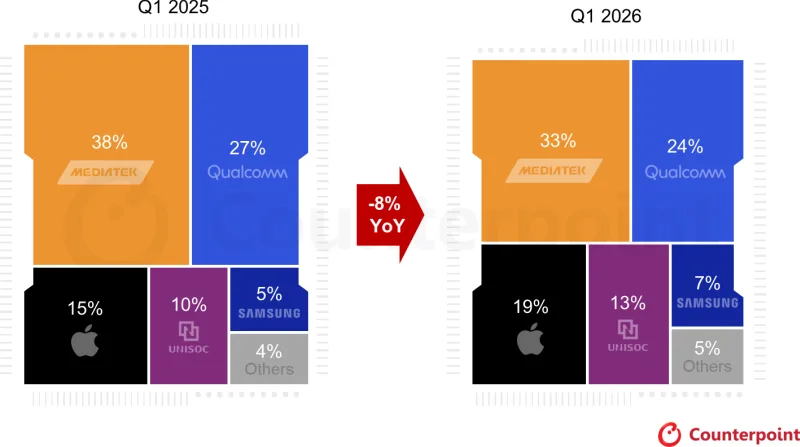
The global smartphone processor market experienced an 8 percent year-over-year decline in shipments during the first quarter of 2026, according to data released by Counterpoint Research. This downturn correlates with broader challenges in the smartphone sector, including a continuing memory shortage that is contributing to rising device prices and potentially constraining overall demand.
The drop in processor shipments signals a notable contraction in a segment historically tied closely to the smartphone industry’s health. Despite this shrinkage, not all companies faced setbacks. Market leaders MediaTek and Qualcomm saw their shares erode during the period, while other key manufacturers managed to capitalize on evolving conditions.
Apple, Samsung, and Unisoc were among the firms that strengthened their foothold in the processor market amid these headwinds. Their improved position suggests a measure of resilience possibly linked to product strategies, supply chain adjustments, or targeted market focus, although specific drivers were not detailed in the data.
The semiconductor shortage, especially in memory components, has had a cascading effect on smartphone production and pricing. As memory costs rise, the overall cost of smartphones increases, which can dampen consumer purchasing activity and impact related component segments such as processors. The 8 percent decline in processor shipments reflects these intertwined supply and demand pressures within the ecosystem.
While MediaTek and Qualcomm continued to hold significant portions of the market, their declining shares highlight intensifying competition and shifting buyer preferences. Meanwhile, Apple’s and Samsung’s gains underline their ongoing influence in the smartphone hardware supply chain, supported by continued demand for their flagship and mid-range devices that rely on in-house or exclusive chip designs.
Unisoc’s rise in market share is particularly notable, signaling the company’s growing role as a contender in supplying chipsets for smartphones. This could reflect broader trends towards diversifying supply sources and increasing demand for cost-effective processors optimized for emerging markets and mid-tier devices.
Overall, the first quarter trends illustrate a smartphone processor market navigating a complex environment. Factors such as component shortages, pricing pressures, and competitive shifts among leading manufacturers will remain critical to watch as the industry progresses through 2026.
Smartphone processor shipments declined 8% in Q1, with Apple, Samsung, and Unisoc increasing market share amid broader sector challenges.