
App Store Sees Surge in New Apps Amid Growth of No-Code Platforms in Early 2026
July 21, 2026
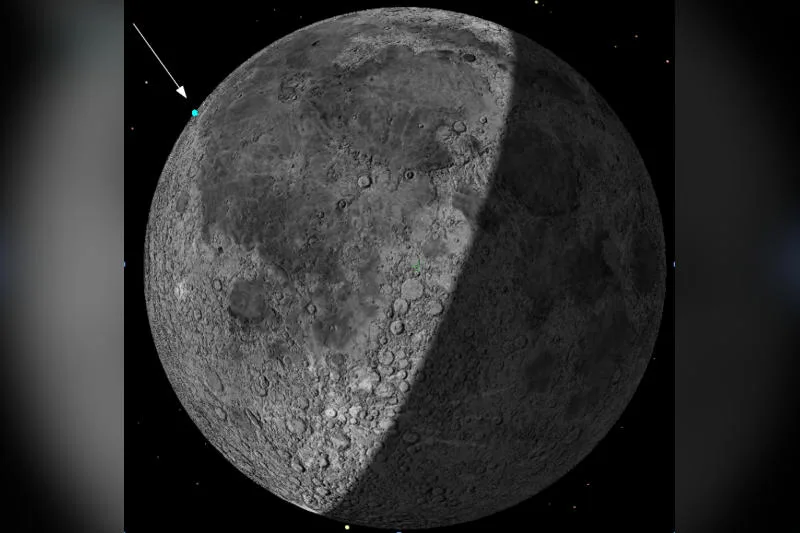
In an intriguing development for lunar exploration, a used upper stage of a SpaceX Falcon 9 rocket is on course to collide with the Moon in August 2026. This event follows recent milestones sparked by the Blue Ghost Mission 1, which successfully landed a lunar lander earlier this year.
The Blue Ghost Mission 1 was launched on January 15, 2025, aiming for lunar surface operations. On March 2, 2025, the mission’s lander achieved its first successful touchdown in the Mare Crisium region, marking an important feat in robotic lunar exploration.
Meanwhile, the upper stage of the Falcon 9 rocket that delivered the spacecraft—identified by the designation 2025-010D—has not followed a typical disposal path. Instead, it continues toward the Moon itself. According to trajectory calculations, this spent rocket stage is projected to crash into the lunar surface in August of this year.
This development highlights an unconventional outcome in the lifecycle of launch vehicle components. Typically, upper stages are either placed in a heliocentric orbit, de-orbited in Earth’s atmosphere, or left in geostationary graveyard orbits. In this case, however, the Falcon 9 stage is on a direct collision trajectory with the Moon, raising considerations about lunar surface debris and management of space assets beyond Earth’s orbit.
SpaceX’s Falcon 9 remains a workhorse for both commercial and governmental missions, and occurrences like this underline the growing complexity of space traffic and orbital mechanics involving celestial bodies other than the Earth.
The broader implications of such impacts on the lunar environment are still under study. While rocket stages impacting the Moon are not unprecedented, their frequency and the growing number of lunar missions underscore the importance of tracking and potentially managing human-made objects in lunar vicinity.
Further information about the consequences of the impact and possible observations in the coming months has not been disclosed. However, space agencies and observatories around the world may monitor the event to assess the impact mechanics and crater formation.
This upcoming lunar collision exemplifies the expanding frontiers and challenges of space exploration as agencies and private companies continue to push beyond Earth’s boundaries.
A spent SpaceX Falcon 9 upper stage is projected to collide with the Moon in August 2026 following Blue Ghost Mission 1’s recent lunar landing.