App Store Sees Surge in New Apps Amid Growth of No-Code Platforms in Early 2026
July 21, 2026
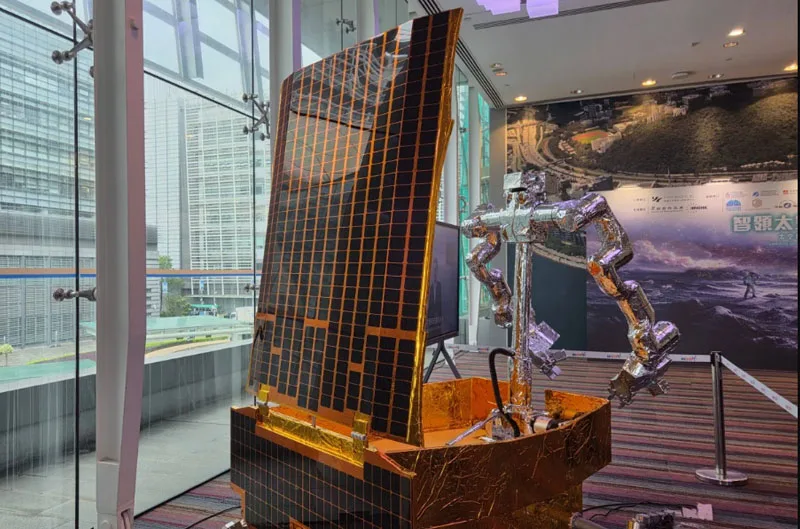
China is advancing its lunar exploration hardware with the introduction of innovative robotic rovers that feature humanoid upper bodies mounted on wheeled platforms. These novel lunar rovers are intended for deployment in the country’s upcoming Moon missions, bringing new capabilities to robotic surface operations.
The Chinese space program’s latest lunar rovers are designed with a distinctive combination: a human-like torso equipped with two robotic arms, positioned atop mobile wheeled chassis. This configuration aims to provide the autonomous rovers with dexterous manipulation skills beyond typical wheeled vehicles, enabling them to perform tasks that involve handling instruments, deploying sensors, and conducting detailed surface investigations.
Traditional rovers have primarily focused on mobility and remote sensing, with limited ability to engage physically with their environment. By integrating anthropomorphic elements such as arms capable of grasping and manipulating objects, these new machines could undertake more complex scientific and technical tasks without direct intervention by human operators.
The design concept enables the rovers to mimic certain human actions, offering more flexible interaction with the lunar terrain and scientific payloads. The wheeled base ensures efficient mobility across the Moon’s surface, while the humanoid torso expands their functional range, potentially allowing them to assemble equipment or adjust instruments in real time.
This approach aligns with the increasing trend in space robotics toward higher autonomy and multifunctionality. Autonomous robots with enhanced manipulation abilities could significantly contribute to the deployment and maintenance of scientific infrastructure on the Moon, such as environmental sensors and communication devices, advancing the scope of lunar research.
While detailed specifications and mission timelines have not been fully disclosed, the initiative marks a notable step in combining robotics, artificial intelligence, and space technology. It reflects China’s commitment to broadening the operational capabilities of its lunar exploration fleet, moving beyond conventional rover designs toward more versatile and capable robotic explorers.
The dual focus on mobility and dexterity could help overcome challenges posed by the Moon’s environment, where complex tasks often require careful handling and precision. These humanoid wheeled robots might represent a new generation of extraterrestrial explorers, setting a precedent for future missions across the solar system.
As global interest in the Moon continues to grow, the development of adaptable robotic systems like these underscores the increasingly sophisticated nature of lunar exploration technologies. China’s projects in this area will likely contribute valuable insights and set new standards for robotic autonomy and functionality in space.
China plans to deploy advanced wheeled rovers with humanoid torsos on the Moon, enhancing autonomy and surface manipulation capabilities.