Advancements in CFET Technology Promise Faster, Smaller, and More Reliable Semiconductor Transistors
July 21, 2026
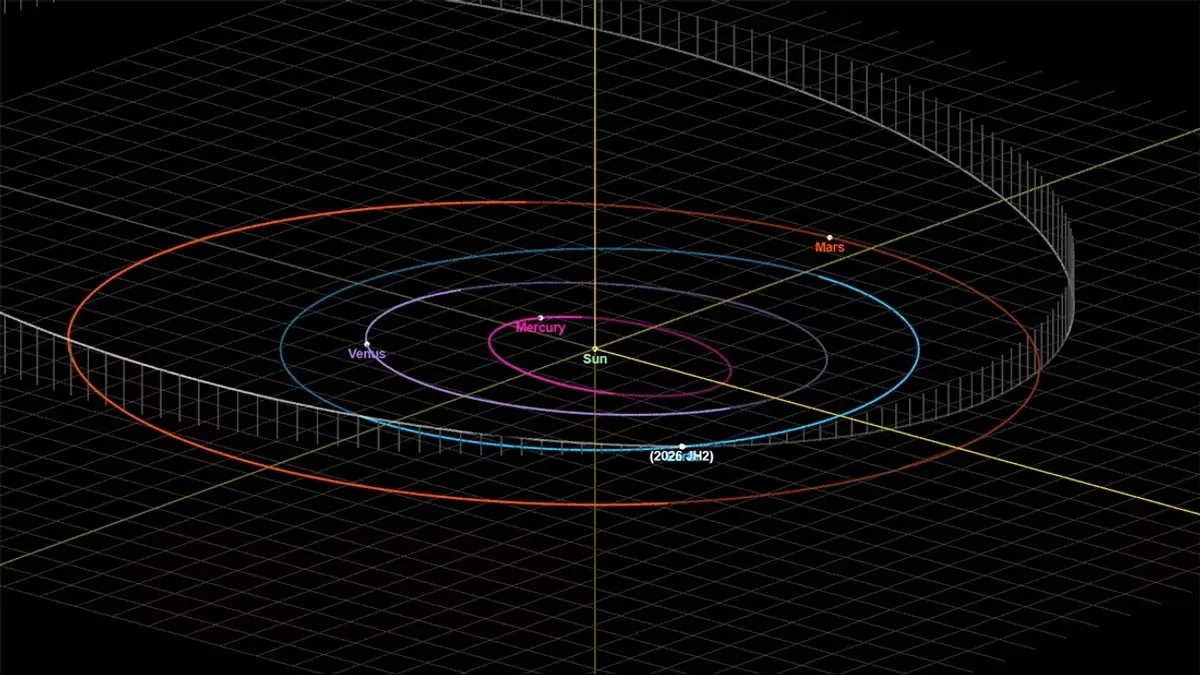
Next Monday, an asteroid roughly the size of a residential home is set to make a close approach to Earth, coming much nearer than the Moon. The object, which was only identified a few days ago, will pass at a distance approximately one-quarter that of the lunar orbit.
The asteroid’s trajectory brings it within a range that amateur astronomers will be able to observe using standard telescopes. This event presents a rare chance to witness a near-Earth object of notable size moving through space at relatively close quarters.
The discovery of this asteroid was reported recently, underscoring the continuing efforts of NASA and other space agencies to monitor near-Earth objects (NEOs). Tracking such bodies is crucial for understanding potential risks and studying their characteristics.
While specific details such as the asteroid’s exact dimensions, speed, and composition were not disclosed, its comparison to the size of a house helps convey the scale of objects that frequently traverse near-Earth space. Close flybys like this one contribute valuable data to the ongoing cataloging of NEOs and offer a practical demonstration of planetary defense monitoring capabilities.
As observational equipment becomes more accessible, events like the upcoming flyby encourage public interest and engagement in space science. They also provide opportunities for both professional and amateur astronomers to gather data that supports planetary science research.
The asteroid’s close pass is scheduled for Monday, May 18. Individuals with interest in astronomy are urged to take advantage of this occasion when conditions permit, to observe an example of the dynamic celestial environment closely surrounding our planet.
A recently discovered asteroid about the size of a house will fly past Earth at a distance four times closer than the Moon next Monday.