App Store Sees Surge in New Apps Amid Growth of No-Code Platforms in Early 2026
July 21, 2026
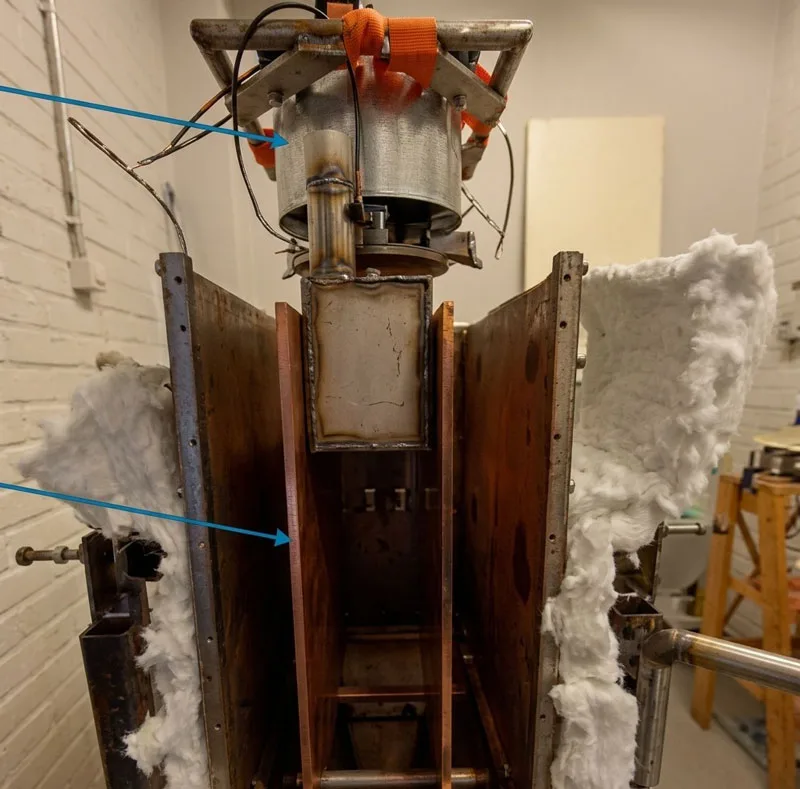
Researchers at Finland’s Aalto University have introduced a novel system for storing thermal energy using inexpensive sand as the storage medium. This innovation is paired with a free-piston Stirling engine that converts stored heat back into electrical power. This approach offers a promising route to balance intermittent renewable energy sources such as solar and wind.
The prototype thermal battery developed by the Finnish team utilizes sand’s capacity to retain heat as a means to store excess electricity generated by renewable resources. When solar panels or wind turbines produce more electricity than is immediately needed, the surplus energy can be converted into heat and transferred into the sand. This method leverages sand’s affordability and abundance, making it an attractive option for large-scale thermal energy storage.
The key innovation lies not only in the material used for heat retention but also in the conversion mechanism. The stored thermal energy in the sand can later be transformed back into electricity through a free-piston Stirling engine. Unlike traditional engines, the Stirling engine operates through cyclic compression and expansion of gas, which drives pistons without requiring external combustion. This facilitates efficient and reliable electricity generation from the stored heat, enabling energy dispatch when demand arises.
Such a system addresses one of the main challenges of renewable energy adoption: intermittency. Solar and wind energy generation fluctuate based on weather and daylight conditions, creating the need for effective storage solutions to ensure a steady power supply. By storing surplus electricity as heat in sand and recovering it as electricity on demand, this technology offers a potential avenue for grid stabilization and energy reliability.
While the initial tests of this prototype have been successfully conducted at Aalto University, details regarding commercial deployment, scalability, and cost efficiency have yet to be disclosed. However, the utilization of common materials like sand combined with the mechanically simple Stirling engine design points to a potentially sustainable and low-cost option compared to chemical batteries or other energy storage technologies.
This research adds to the growing interest in thermal energy storage systems that can complement electrical storage and enhance the integration of renewable sources in energy grids. Further development and field trials will be necessary to evaluate real-world performance and economic feasibility.
Aalto University researchers created a thermal battery that stores heat in sand and converts it back to electricity using a Stirling engine.