Advancements in CFET Technology Promise Faster, Smaller, and More Reliable Semiconductor Transistors
July 21, 2026
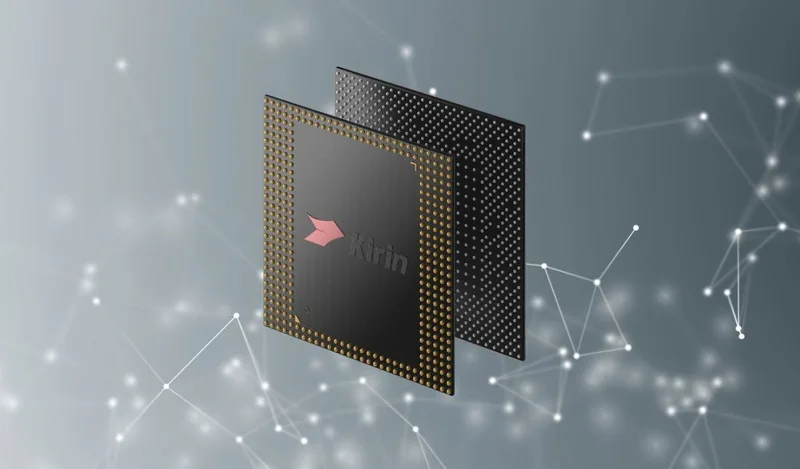
Huawei is preparing to introduce a new generation of its Kirin processor technology for its upcoming Mate 90 series smartphones. The company recently unveiled its proprietary semiconductor scaling principle, named the “tau scaling law,” alongside a novel architecture called LogicFolding. These innovations are set to underpin the next wave of its mobile processor designs.
At a recent financial forum and summit held in Shenzhen, Huawei representatives disclosed plans to launch a significantly more powerful Kirin chipset. This new processor is expected to utilize a semiconductor manufacturing process comparable to 3-nanometer technology, a cutting-edge scale that promises notable improvements in performance and energy efficiency compared to current standards.
The introduction of the tau scaling law demonstrates Huawei’s commitment to advancing semiconductor manufacturing and design, aiming to extend the capabilities of their processors beyond conventional scaling trends. Coupled with the LogicFolding architecture, these technologies are designed to optimize computing efficiency and throughput, potentially providing a competitive edge in the mobile processor arena.
Though specific details about the processor’s specifications, performance benchmarks, or commercial availability remain undisclosed, Huawei’s announcement signals a strategic move to reinforce its hardware ecosystem amidst growing challenges in semiconductor supply and manufacturing.
The Mate 90 series is widely anticipated as Huawei’s flagship smartphone lineup for the near future, and equipping it with an advanced Kirin chip based on a near 3-nanometer process would position the devices prominently in terms of both innovation and performance. This development aligns with broader industry trends toward progressively smaller fabrication nodes, which play a critical role in improving power efficiency and computational power for mobile devices.
As Huawei continues to pursue independent semiconductor design capabilities, these advancements could mark a pivotal moment in the company’s efforts to maintain competitiveness and innovate within the global smartphone market.
Huawei plans to equip upcoming Mate 90 series smartphones with a next-generation Kirin chip built on a 3-nanometer semiconductor process.