TrendForce Predicts Flash Memory Supply Shortage Will End in Late 2027
July 21, 2026
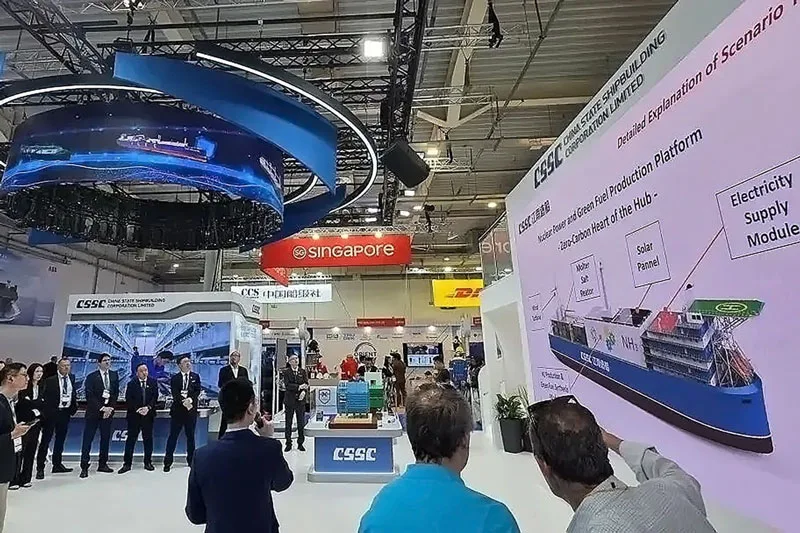
China has introduced an innovative concept for the future of maritime logistics, showcasing a massive floating island equipped with cutting-edge energy and transport technologies. Developed by Jiangnan Shipyard, a division of the state-owned China State Shipbuilding Corporation, this project aims to revolutionize shipping operations through a combination of sustainable energy systems and advanced cargo handling facilities.
The floating island is designed to function as a self-sufficient maritime logistics center featuring a container transshipment terminal capable of storage and handling operations. Its infrastructure is intended to support the increasing need for efficient cargo distribution while minimizing environmental impact.
Central to the island’s energy supply is a molten salt nuclear reactor that utilizes thorium as fuel. This next-generation nuclear technology is being explored as a safer and more sustainable alternative to traditional reactors. The reactor’s compact and onboard design provides continuous power for the floating facility, eliminating reliance on fossil fuels.
In addition to nuclear power, the island integrates renewable energy sources to complement its electricity needs. It also includes dedicated stations for charging electric ships and produces hydrogen onsite, supporting a multi-faceted clean energy ecosystem. The hydrogen output is expected to serve as a fuel for maritime vessels and potentially other transportation methods, aligning with global efforts to decarbonize shipping.
This multifunctional approach reflects a broader trend towards combining different green technologies within unified platforms, enabling more resilient and environmentally responsible supply chains. By incorporating nuclear, renewable, and hydrogen energy generation with a fully operational logistics terminal, the floating island concept addresses several challenges faced by modern maritime freight.
While the project remains at the conceptual stage, it was unveiled at an international exhibition in Greece, highlighting China’s ambitions in sustainable marine infrastructure and energy innovation. The design aims to support the growth of eco-friendly shipping routes and enhance capabilities for container handling at sea, potentially reducing port congestion and emissions linked to traditional logistics hubs.
Details such as development timelines, operational deployments, and economic viability have not been disclosed. Nonetheless, this floating island initiative represents a significant exploration into how advanced nuclear and renewable energy technologies might intersect with the shipping industry in the near future.
China’s Jiangnan Shipyard reveals a floating island with a molten salt thorium reactor, green energy, hydrogen production, and container terminal for eco-friendly shipping.