App Store Sees Surge in New Apps Amid Growth of No-Code Platforms in Early 2026
July 21, 2026
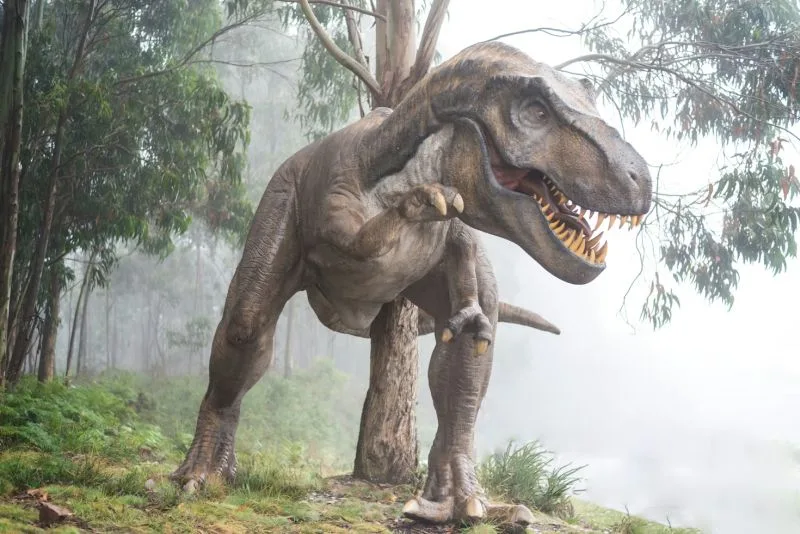
Paleontology often involves studying fossilized remains and traces left by prehistoric creatures to understand their existence and behaviors. However, organizing and accurately identifying this ancient material is a complex challenge. Researchers in Germany have introduced an artificial intelligence (AI) approach to assist in this task.
The German scientific team utilized AI to analyze fossilized dinosaur footprints, focusing on identifying eight characteristic features within these imprints. These traits serve as important markers, allowing for more precise classification of the dinosaurs that created them.
Traditional methods of analyzing fossil footprints rely heavily on manual examination, which can be subjective and labor-intensive. By employing AI, the researchers automated the detection process, increasing both the consistency and accuracy of footprint categorization.
This AI-driven analysis aids paleontologists in building a better understanding of dinosaur diversity and behavior patterns inferred from trace evidence. Recognizing distinct footprint characteristics enhances the ability to map the presence and movement of various dinosaur species across different geological periods and locations.
The integration of machine learning techniques with paleontological data represents a growing trend in scientific research. Such interdisciplinary approaches leverage AI’s capabilities to manage extensive datasets that would be difficult to analyze efficiently through human effort alone.
While this study concentrated on eight major features for classification, the methodology can potentially be adapted to other types of fossilized traces or biological imprints. This development marks a promising step toward more refined and data-driven paleontological investigations.
The application of AI in identifying dinosaur footprints underscores the technology’s expanding role beyond traditional computer science fields, demonstrating tangible benefits in advancing knowledge of Earth’s prehistoric life.
German researchers employ AI to enhance dinosaur classification by analyzing eight key features of fossilized footprints.