FCC Broadens Import Ban on Chinese Routers and Technology Products
June 27, 2026
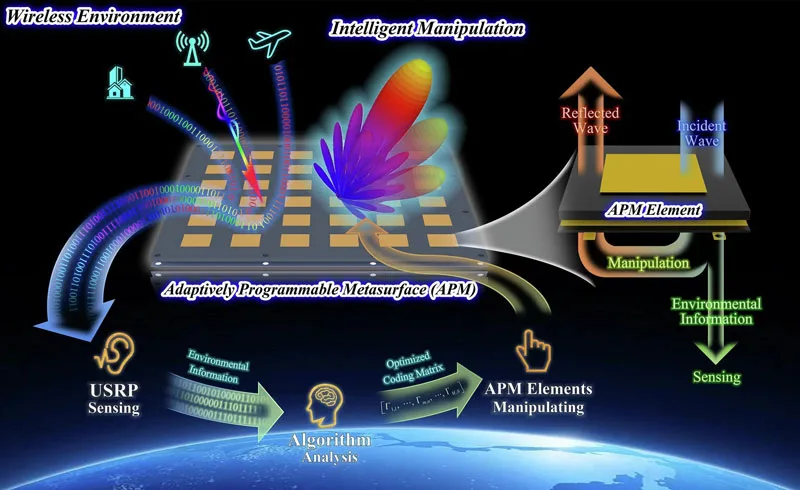
Researchers in China have unveiled an innovative technology described as “smart skin” for buildings, designed to address persistent connectivity issues in urban and underground environments while also providing occupant monitoring capabilities.
The development focuses on creating a versatile surface layer that can be applied to building exteriors and interiors, including hard-to-reach locations such as underground tunnels and shafts. This technology integrates wireless sensors and cellular signal repeaters, aimed at eliminating dead zones where mobile communication often fails.
Cellular dead zones in densely built areas and subterranean structures pose significant challenges for both everyday communication and emergency response. The smart skin technology serves as a solution by providing continuous signal relay, thereby improving network coverage in these traditionally problematic spaces.
Beyond enhancing wireless signals, the smart skin functions as a monitoring system, capable of tracking individuals within the covered spaces. This dual functionality suggests applications in safety management, security monitoring, and infrastructure maintenance by providing real-time data on occupancy and movement.
The concept represents a significant step forward in the integration of intelligent surfaces within urban infrastructure. By combining communication technology and sensor networks into a building’s outer layer, the smart skin offers an innovative approach to addressing persistent connectivity gaps and enhancing situational awareness in complex environments.
Details regarding the materials used, installation methods, and operational parameters of this smart skin have not been disclosed. Additionally, information on commercial availability, cost, or adoption plans remains limited at this time.
This advancement aligns with broader trends in smart city development, where intelligent systems are embedded into the urban fabric to facilitate better communication, safety, and resource management. The ongoing research underscores the growing intersection of wireless technology and building infrastructure, promising improvements in how cities handle connectivity and monitor public spaces.
Chinese scientists have created smart skin for buildings that enhances wireless coverage and monitors people in challenging environments.