BMW Unveils iX5 Electric SUV with Impressive 845 km Range
July 1, 2026
Meta has released Brain2Qwerty version 2, an advanced artificial intelligence system designed to convert recordings of brain activity directly into text without requiring any surgical procedures or brain implants. This innovation marks a significant step forward in noninvasive brain-computer interfaces, aimed at helping individuals affected by various neurological conditions and those who have experienced brain or spinal cord injuries.
Unlike traditional brain-computer interface technologies that often depend on invasive implants or surgery to detect neural signals, Brain2Qwerty v2 operates purely through external methods. The system interprets neural data related to imagined typing movements and translates them into corresponding text output. Although Meta clarifies this development does not involve “reading thoughts,” the technology nonetheless holds considerable promise for enhancing communication for patients with limited mobility or impaired speech due to neurological disorders.
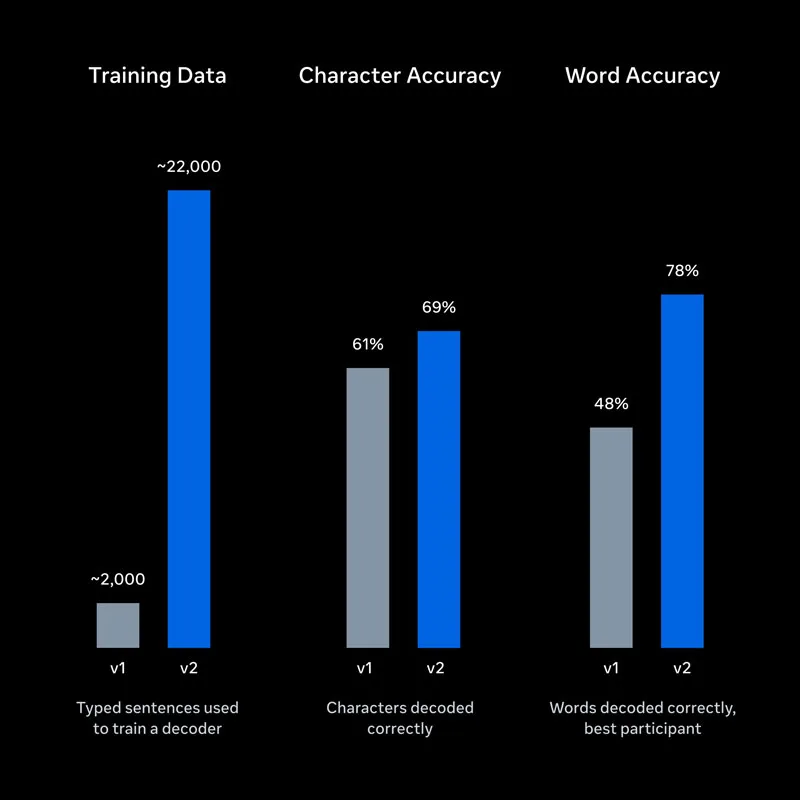
Brain2Qwerty v2 builds upon Meta’s previous research, incorporating improvements in AI models and training techniques to increase the accuracy and reliability of translating brain activity into text. The approach utilizes sophisticated machine learning algorithms capable of decoding subtle neural patterns associated with intended keyboard input, without requiring any physical interaction from the user.
This noninvasive solution could offer an alternative communication method for individuals affected by paralysis, amyotrophic lateral sclerosis (ALS), stroke, or other conditions that disrupt the ability to type or speak. By using only external sensors, the system avoids the risks and complications linked to surgical implants, widening potential applicability and accessibility for a diverse patient population.
Meta has made all data, including the AI models and training methodologies, publicly available on open platforms. This move aims to encourage collaboration across the research community and facilitate further advancements in brain-computer interface technologies. By enabling broader access to its resources, Meta invites researchers, developers, and clinicians to build upon Brain2Qwerty’s foundation to enhance and customize solutions for specific medical and assistive needs.
While the technology is still evolving, the progress represented by Brain2Qwerty v2 signals a growing convergence of artificial intelligence and neuroscience focused on creating practical tools that improve quality of life. These developments could redefine how individuals with neurological impairments communicate and interact with digital devices in the future.
Specific details about the system’s deployment, commercial availability, or integration with existing platforms were not disclosed. Nevertheless, Meta’s commitment to transparency and open collaboration suggests a long-term vision of推动 a noninvasive, AI-powered brain-computer interface ecosystem comprehensively supported by both industry and academia.
Meta introduces Brain2Qwerty v2, an AI system that translates brain activity into text without implants, aiding neurological patients and trauma survivors.