TrendForce Predicts Flash Memory Supply Shortage Will End in Late 2027
July 21, 2026
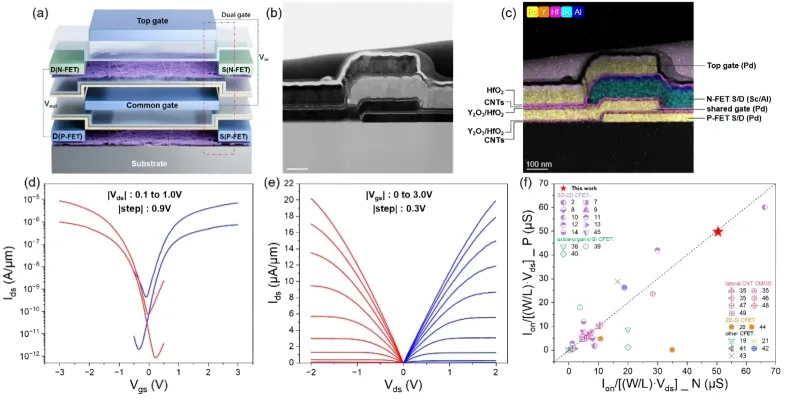
Despite the ongoing excitement around emerging computational paradigms like photonics and spintronics, traditional semiconductor transistor manufacturing continues to progress at a remarkable pace. One of the latest advancements gaining attention in the chip industry is Complementary Field-Effect Transistor (CFET) technology, which aims to enhance the performance and efficiency of classical transistor architectures.
CFET technology focuses on stacking complementary transistors vertically to reduce footprint while preserving or boosting speed and reliability. This approach addresses the persistent demand for more powerful and compact chips in everything from mobile devices to high-performance computing systems.
Traditional approaches to transistor improvement have often revolved around scaling down device dimensions or introducing new materials and computing principles. CFETs, however, represent a significant shift by enabling three-dimensional transistor stacking, combining p-type and n-type transistors in a vertically integrated structure. This configuration not only reduces the overall chip area but also enhances the electrical performance by minimizing interconnect delays between transistors.
The enhanced integration in CFETs supports faster switching speeds and potentially contributes to lower power consumption, addressing two critical components for modern electronics. Furthermore, this method promises to maintain or even improve device reliability, a crucial consideration as transistors increasingly push the limits of miniaturization.
While researchers and foundries continue to explore alternative computing methods, such as leveraging photons for data transmission or utilizing electron spin in spintronic devices, the semiconductor industry recognizes the value in further refining classical transistor technologies. CFET offers a pragmatic path to meet immediate and near-future performance needs without the challenges sometimes associated with less mature technologies.
This development underscores that incremental innovations within established semiconductor manufacturing processes remain vital to advancing the computing landscape. CFET technology exemplifies how traditional transistor manufacturing can continue to evolve, delivering improvements in speed, size, and durability that are essential for sustaining the momentum of digital innovation.
Classical semiconductor transistor production is advancing rapidly with CFET technology, offering improved speed, size, and reliability.