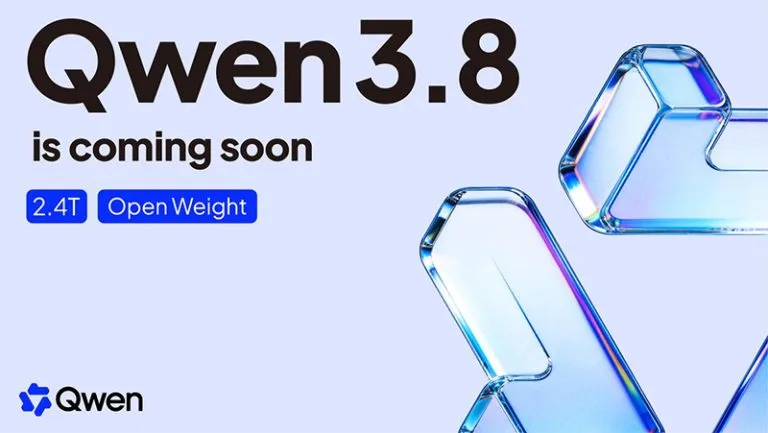
Alibaba Unveils 2.4 Trillion Parameter AI Model Qwen3.8 with Multimodal Capabilities
July 19, 2026
Recent advancements in artificial intelligence have stirred discussions within the software development community about the future of traditional programming paradigms. The releases of new AI-driven coding assistants from OpenAI and Anthropic have intensified questions regarding the role of conventional hand-coding practices.
Developers around the world have increasingly turned their attention to AI models designed to assist with software creation. The latest offerings by prominent companies OpenAI and Anthropic showcase sophisticated capabilities in generating and refining program code, challenging long-established development workflows.
OpenAI’s Codex, known for its ability to interpret natural language commands and translate them into functional code, has been instrumental in accelerating tasks previously requiring extensive manual input. Similarly, Anthropic’s Claude is gaining attention for its nuanced understanding and assistance in coding projects, further demonstrating the potential for AI to augment or even replace traditional coding methods in certain contexts.
These tools leverage underlying advances in natural language processing and machine learning to interpret developer intents and produce reliable snippets or entire sections of code. This shift has prompted developers to consider whether rote coding practices may gradually give way to a more AI-mediated approach, wherein human programmers focus more on problem-solving and system design while AI handles routine or boilerplate coding.
Industry analysts note that while AI coding assistants offer promising efficiency gains and reduce barriers for novice programmers, evolving alongside these tools is essential to address their limitations, such as ensuring code correctness, security, and maintainability. Consequently, the emergence of AI in programming is viewed less as obsolescence for traditional skills and more as a significant transformation in how developers approach software creation.
As these AI models continue to mature, the development community is actively exploring best practices for integrating AI assistance into existing workflows. This includes balancing automation benefits with the need for human oversight and creativity. The dialogue reflects a broader technological shift where machine intelligence increasingly complements human expertise, reshaping longstanding conventions across industries.
While definitive conclusions on the future of coding remain premature, the current momentum suggests that AI-powered tools will become an integral part of software development, encouraging programmers to adopt new mindsets and skill sets. Whether this evolution spells the end of traditional programming as it has been known or forms a hybrid approach remains to be seen.
New AI coding assistants from OpenAI and Anthropic prompt developers to rethink traditional programming approaches amid rapid advances.