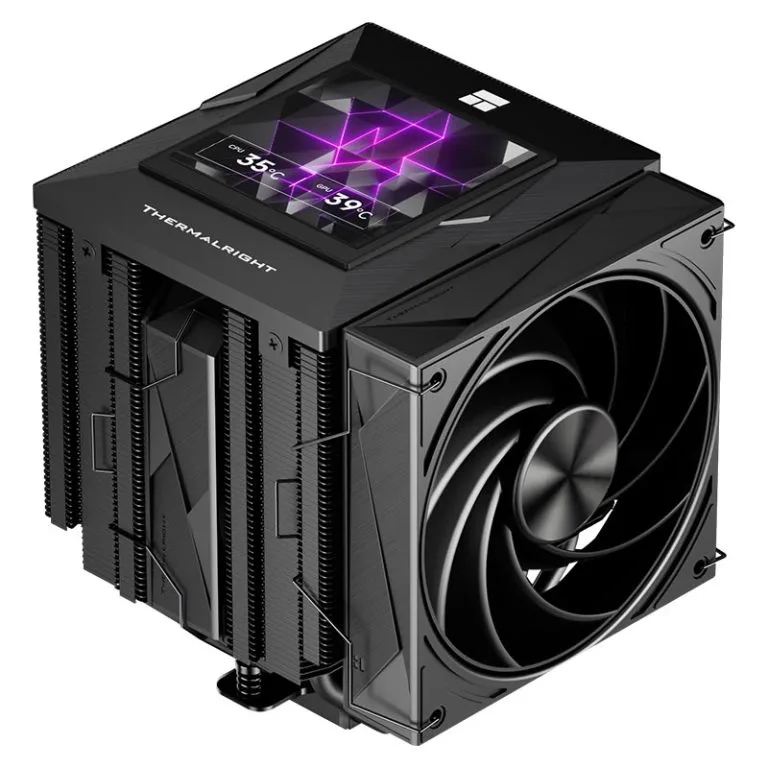
Thermalright Introduces Royal Pretor 130 Vision Cooler with Integrated 3.95-Inch Color Display
July 21, 2026

More than half a decade after Nvidia introduced its GeForce RTX series aimed at hardware-accelerated ray tracing, the gaming industry has yet to adopt this technology as a widespread standard. Despite the impressive capabilities of these GPUs, major game studios have largely bypassed ray tracing in favor of alternative lighting solutions for their high-budget projects.
Hardware ray tracing has been touted as a transformative breakthrough for photo-realistic lighting in games, promising enhanced reflections, shadows, and global illumination. Nvidia spearheaded this movement, integrating dedicated cores in their RTX lineup to accelerate ray tracing calculations in real time.
Yet, the anticipated broad industry adoption has not materialized as expected. Leading game developers have instead leaned towards other methods that deliver visually engaging lighting effects without the high computational cost of ray tracing. This conservative approach reflects a balance of performance constraints with desired graphical fidelity.
One of the key alternatives gaining prominence is Unreal Engine 5’s Lumen global illumination system. Lumen achieves dynamic, realistic lighting throughout game environments using a combination of software-based techniques optimized for current hardware capabilities. Its flexibility and performance benefits have made it an attractive choice, especially given the difficulty and expense associated with implementing full ray-traced lighting pipelines.
The scarcity of ray tracing in blockbuster games reveals the industry’s reservations about its practical benefits relative to resource requirements. Even projects with substantial budgets often opt to forgo the technology, prioritizing consistent frame rates and scalable visuals across various hardware.
Overall, while hardware ray tracing delivers undeniable visual improvements under certain conditions, the technology has yet to become a standard in gaming portfolios as of 2025. The industry continues to explore hybrid and software-based lighting approaches that optimize the balance between graphical quality, performance, and development complexity.
Despite Nvidia’s push and RTX GPU launches, hardware ray tracing remains uncommon in top-tier games, overshadowed by alternative lighting technologies.