
Honor Launches X7e Smartphone in Russia Featuring 7200mAh Battery and AI Shortcut Button
July 21, 2026
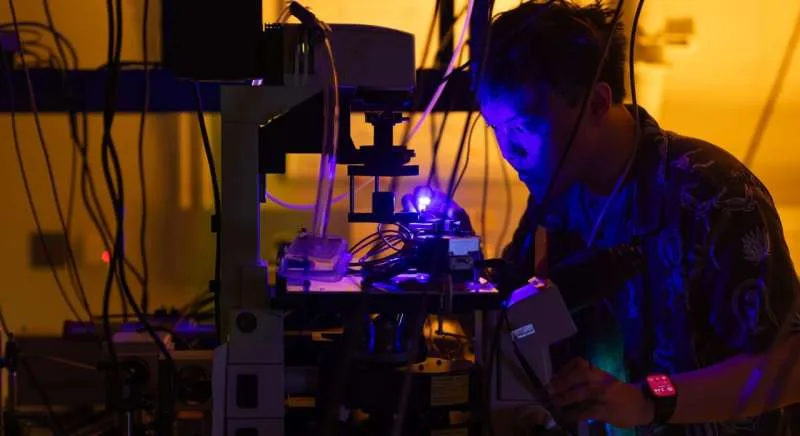
Researchers at the University of California, Santa Barbara (UCSB) have engineered extremely compact microLEDs that measure approximately as wide as a single human hair, around 100 micrometers in diameter. These tiny light-emitting devices, fabricated using gallium nitride (GaN), represent a novel approach that may serve as an alternative to traditional semiconductor lasers.
The UCSB team’s microLEDs feature a distinctive structure incorporating side-distributed Bragg reflectors. This specialized configuration improves the directionality of the light emitted and boosts the efficiency not only when light is output into the surrounding air but also when transmitted through the supporting substrate.
Conventional semiconductor lasers typically rely on complex designs for controlled light output, but this breakthrough microLED design achieves enhanced performance in a significantly scaled-down form factor. The use of GaN, a material known for its robust optoelectronic properties, enables the devices to sustain high-quality light emission despite their reduced size.
This development could have considerable implications for photonics and optoelectronics applications that demand compact, efficient light sources. The improved emission characteristics may facilitate integration into technologies requiring precise beam direction and minimal device footprints.
While the research focuses on demonstrating the fundamental functionality and benefits of these microLEDs, further exploration into practical applications and commercialization pathways is anticipated. Details regarding cost, scalability, and market availability have not been disclosed.
The advancement from UCSB adds to a growing body of work aimed at optimizing light-emitting components beyond traditional semiconductor lasers, suggesting promising directions for future optical devices and systems.
Researchers at UCSB have created microLEDs with diameters matching a human hair, offering enhanced light directionality and efficiency as a semiconductor laser alternative.