Advancements in CFET Technology Promise Faster, Smaller, and More Reliable Semiconductor Transistors
July 21, 2026
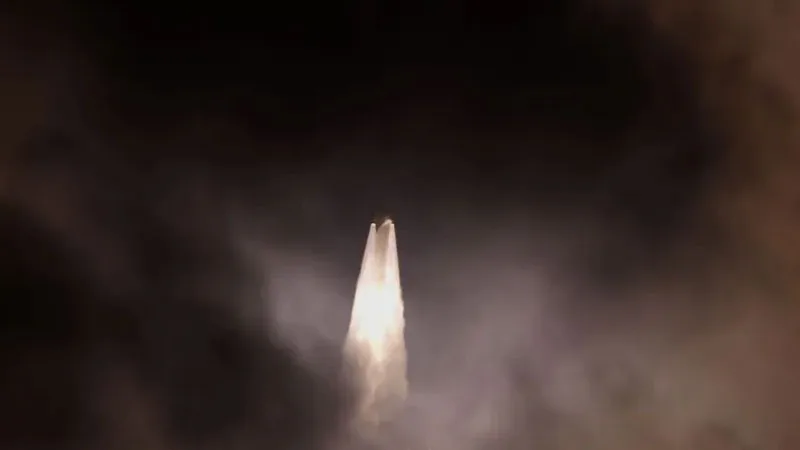
The United States Department of Defense has announced a suspension of launches for the United Launch Alliance (ULA) Vulcan Centaur rocket following a second anomaly involving one of its solid rocket boosters. The Vulcan Centaur, designed to replace the venerable Atlas V for critical national security missions, faced technical difficulties during its latest flight in February 2026.
The incident took place on February 12, 2026, during the launch of the USSF-87 mission from the military installation at Cape Canaveral. One of the four GEM 63XL solid rocket boosters, supplied by Northrop Grumman, experienced an abnormal event while in operation. This marks the second such anomaly to emerge in only three launches of the Vulcan Centaur, prompting the Pentagon to pause additional launches until the issues are thoroughly investigated.
Vulcan Centaur was developed as an advanced launch system intended to meet the stringent requirements of national defense payloads. The recurring booster malfunctions have raised questions about the reliability of the new rocket at a time when dependable access to space is essential for U.S. security infrastructure.
The decision to freeze further launches underscores the critical nature of these missions and the importance of ensuring that all launch components perform flawlessly. Northrop Grumman’s GEM 63XL boosters play a vital role in the Vulcan Centaur’s liftoff and initial ascent phases, and any anomalies could jeopardize mission success.
While specific details about the anomalies have not been disclosed, the Pentagon’s move highlights heightened vigilance and a precautionary approach to launch safety. The ongoing evaluations and corrective measures will determine when the Vulcan Centaur can resume flights carrying sensitive payloads for U.S. defense agencies.
This development places additional scrutiny on ULA as it seeks to establish Vulcan Centaur as a reliable successor to the Atlas V, which has historically provided a dependable launch vehicle for high-priority government missions. The findings from this investigation will likely influence ULA’s approach to future launches and booster design improvements.
As the investigation continues, stakeholders across the aerospace and defense communities will be closely monitoring how these issues are addressed to restore confidence in the Vulcan Centaur program. Meanwhile, contingency plans may be considered to ensure uninterrupted deployment of national security assets into orbit.
The Pentagon has paused ULA Vulcan Centaur launches after a second anomaly with a solid rocket booster occurred during recent national security missions.