
Thermalright Introduces Royal Pretor 130 Vision Cooler with Integrated 3.95-Inch Color Display
July 21, 2026
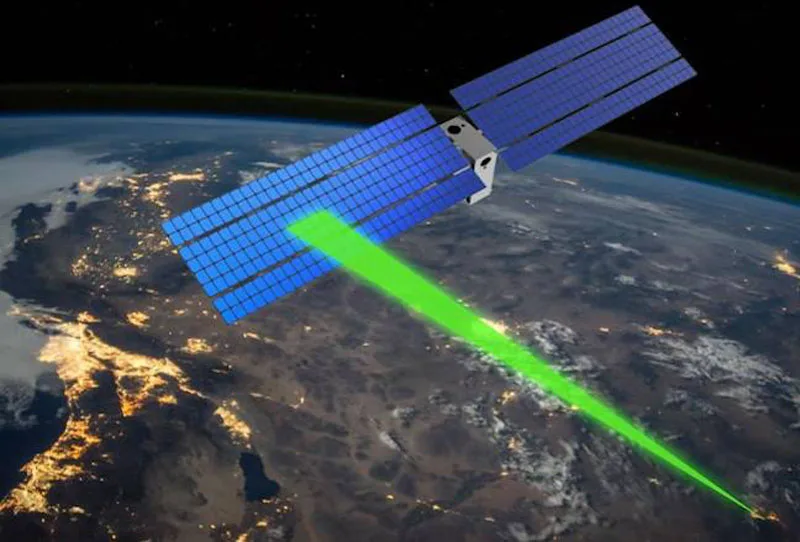
The European Space Agency (ESA) and the Chinese Academy of Optoelectronics have independently announced significant advancements in laser communication technology with geostationary satellites. These breakthroughs involved successful tests of gigabit-speed optical links operating at an altitude of approximately 36,000 kilometers.
Laser communication has long been anticipated as a transformative step for space-based data transmission. Traditional radio frequency channels currently used for satellite communications face limitations related to bandwidth and latency. Optical links, by contrast, offer a pathway to higher data rates and reduced signal delays, which are crucial for various applications including commercial, scientific, and defense sectors.
Working independently yet with parallel goals, ESA and the Chinese research institute demonstrated the feasibility of maintaining high-speed laser communication over the extensive distance to geostationary orbit. This orbit, located around 36,000 kilometers from Earth, is a key position for satellites that provide continuous coverage over fixed regions.
ESA’s efforts in this domain align with ongoing initiatives to enhance deep space communication capabilities and improve the infrastructure supporting satellite constellations. Meanwhile, the Chinese Academy of Optoelectronics has also confirmed the successful establishment of gigabit optical links, underscoring the increasing global emphasis on laser communication technologies.
These developments are timely given the growing demand for faster and more reliable data transfer from space platforms. Businesses rely heavily on satellite communications for connectivity in remote areas, global broadcasting, and network expansion. Meanwhile, scientific missions require rapid transmission of large volumes of data collected in orbit. Military and defense sectors, too, benefit from secure and instantaneous communication channels that laser technology promises to provide.
Both ESA and Chinese advancements highlight a broader international move toward integrating optical communication systems into existing and future space assets. Implementing laser links could lead to more efficient satellite networks and foster new capabilities in aerospace communications.
While detailed technical specifications, pricing, and deployment schedules were not disclosed, these successful tests mark important milestones. The progress demonstrates practical capabilities that could soon reshape the landscape of satellite communications and usher in a new era of broadband connectivity from orbit.
ESA and China’s Academy of Optoelectronics demonstrate high-speed laser links with satellites orbiting at 36,000 kilometers altitude.