Honor Launches X7e Smartphone in Russia Featuring 7200mAh Battery and AI Shortcut Button
July 21, 2026
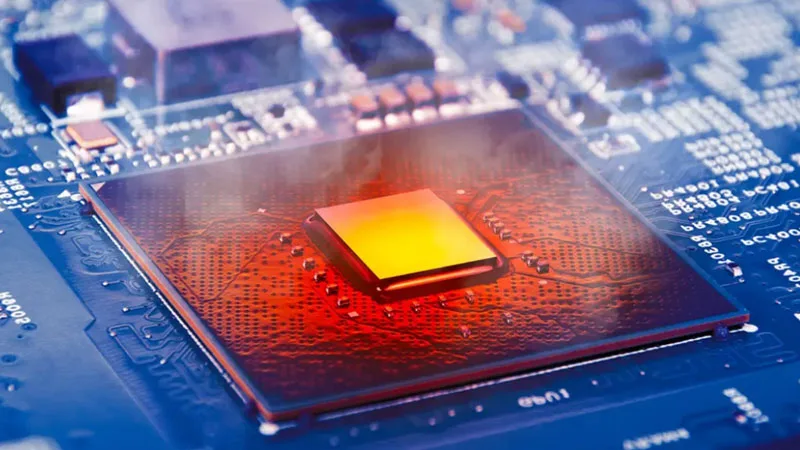
For decades, advancing computational performance has been intertwined with managing heat and minimizing energy loss. The escalation of processing power inevitably leads to a surge in heat generation, presenting a growing obstacle as traditional cooling solutions such as air coolers or liquid cooling systems struggle to keep pace.
However, recent scientific developments in the field of computational thermodynamics suggest a paradigm shift. Instead of fighting against thermal noise—a natural byproduct and a primary source of computational errors—researchers are exploring ways to incorporate it as a functional element within computing processes.
Thermal noise has long been considered an unwanted disturbance hampering accurate data processing, compelling engineers to devote significant effort to suppress it. The new approach reframes this perspective by leveraging the inherent properties of heat and thermal fluctuations to improve operational efficiency rather than diminish it.
The shift entails utilizing thermal dynamics as an integral part of the calculations themselves, effectively transforming what was historically viewed as a harmful side effect into a beneficial asset. This innovative mindset opens the door to a new category of hardware design, where energy dissipation and heat generation are not just challenges to be mitigated but are harnessed consciously to achieve higher efficiency.
This breakthrough holds particular significance as it promises to overcome the exponential growth of excess heat accompanying increased computational power. Conventional methods have relied heavily on improving cooling technologies to manage this heat. However, even the most sophisticated cooling systems face inherent physical limits, making it imperative to rethink the fundamental principles guiding energy consumption and heat dissipation in computing.
By incorporating thermal fluctuations and entropy into the computational framework, systems could operate at lower overall energy costs while maintaining or potentially enhancing performance. This concept is aligned with broader efforts in sustainable technology, aiming to reduce the carbon footprint and runtime energy requirements of high-performance computing equipment.
While the specifics around implementation and scalability remain emerging, the theoretical foundation suggests a promising route forward. The integration of thermodynamic principles into computation underscores a novel balance between physics and information technology, which might redefine hardware efficiency in the coming years.
In summary, as computing continues to evolve and demand more power, addressing heat generation not just by elimination but by integration represents a notable advancement. This fresh approach could yield new classes of processors and systems that are substantially more energy-efficient, potentially influencing a broad array of applications from artificial intelligence to data centers and beyond.
New approaches in computational thermodynamics turn heat from a challenge into an asset, dramatically boosting energy efficiency.