
TrendForce Predicts Flash Memory Supply Shortage Will End in Late 2027
July 21, 2026
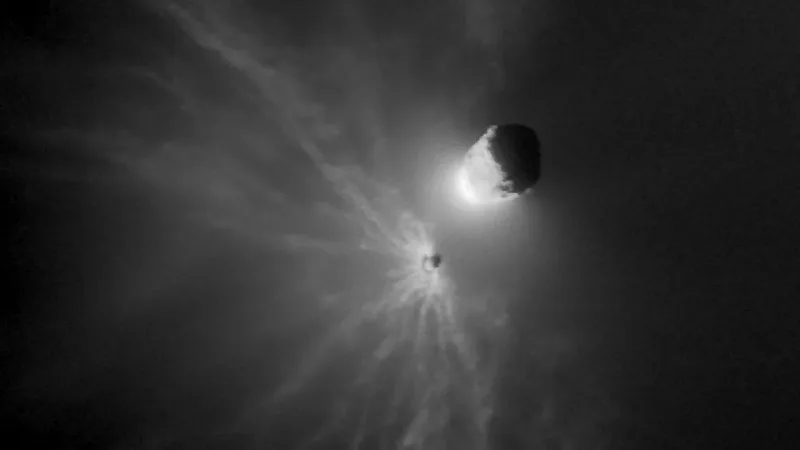
In an unprecedented achievement for space exploration and planetary defense, NASA’s Double Asteroid Redirection Test (DART) mission has successfully demonstrated humanity’s capability to alter the trajectory of a celestial body. The mission, launched as an experimental effort to test asteroid deflection techniques, culminated in a deliberate high-velocity collision with Dimorph, the smaller member of a binary asteroid pair.
The DART spacecraft, weighing approximately 570 kilograms, intentionally impacted Dimorph at a velocity exceeding 22,500 kilometers per hour. Dimorph serves as the natural satellite of a larger asteroid named Didymos, together forming a binary system within the solar system. The objective of this collision was to validate the kinetic impactor approach as a viable method for redirecting potentially hazardous asteroids away from Earth.
While the mission’s primary goal was to test asteroid deflection for future planetary defense scenarios, the outcome also marked a historic moment: for the first time, humans directly influenced the orbital path of a celestial object. This milestone underscores a new chapter in space exploration, where mankind moves beyond observation and begins actively modifying the environment of the solar system.
The alteration of Dimorph’s orbit, although unintended as a permanent change in the solar system’s dynamics, confirms the feasibility of impact-based asteroid deflection strategies. Details regarding the precise scale of the orbital modification have not been fully disclosed. However, the implications are clear—this technology could one day shield Earth from asteroid impacts by shifting threatening objects onto safer paths.
NASA’s DART mission represents a significant step forward in planetary defense initiatives, highlighting the importance of developing proactive measures against cosmic hazards. The success of this mission could pave the way for future efforts to safeguard the planet, ensuring that humanity maintains the capability to influence its cosmic neighborhood deliberately and responsibly.
NASA’s DART mission marked humanity’s first deliberate change to a celestial body’s orbit by colliding with asteroid Dimorph.