Honor Launches X7e Smartphone in Russia Featuring 7200mAh Battery and AI Shortcut Button
July 21, 2026
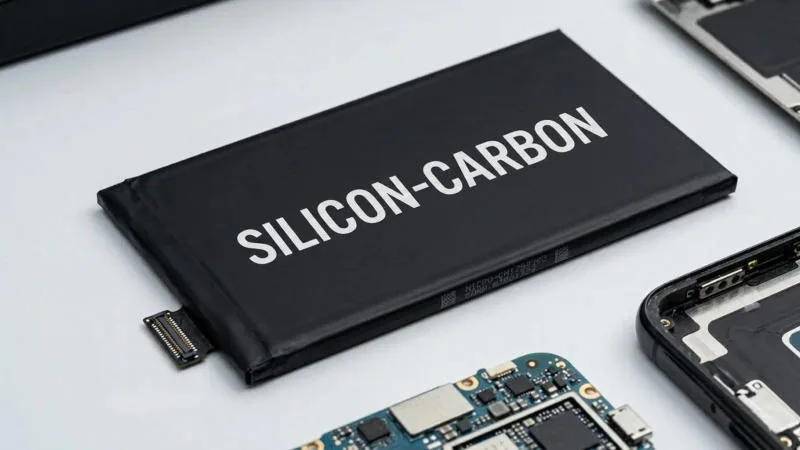
Samsung is conducting tests on silicon-carbon battery cells intended for use in electronic devices, focusing on models with capacities of 12,000 and 18,000 milliampere-hours (mAh). This development reflects the company’s ongoing research into advanced battery technology aimed at enhancing energy storage solutions.
Earlier efforts by Samsung included trials with a higher-capacity variant rated at 20,000 mAh. However, after evaluating its performance, the company decided to discontinue work on that particular version. The reasons for the decision to abandon the 20,000 mAh battery option have not been publicly detailed, but it suggests challenges in meeting the required technical or safety standards at that capacity.
Unlike some competitors, particularly certain Chinese manufacturers, Samsung has yet to incorporate silicon-carbon batteries into its mainstream commercial products. The silicon-carbon technology is notable for its potential to improve battery performance by combining silicon’s high capacity with carbon’s structural stability, potentially allowing for longer-lasting and more efficient energy storage.
By focusing on capacities of 12,000 and 18,000 mAh, Samsung appears to be balancing energy density with manufacturability and reliability. These capacities could suit a range of portable electronics, depending on how the technology evolves and integrates with device designs.
The deployment of silicon-carbon batteries remains an area of intense interest in the battery industry, as manufacturers seek alternatives to conventional lithium-ion cells that are capable of delivering higher energy density without compromising safety and lifecycle. Samsung’s testing efforts indicate a commitment to exploring these alternatives, even as the company remains cautious about fully transitioning to such new battery chemistries.
Details regarding the broader commercial plans or timelines for integrating these silicon-carbon batteries into Samsung products have not been revealed. The company continues to refine the technology through rigorous testing phases aimed at ensuring performance standards align with consumer expectations and industry requirements.
As advancements in battery materials continue, Samsung’s research may lead to future products featuring enhanced battery longevity and charging efficiency. For now, the focus remains on evaluating the feasibility of silicon-carbon cells at specific capacity levels that can meet both performance and safety criteria.
Samsung is evaluating silicon-carbon batteries with capacities of 12,000 and 18,000 mAh, after discontinuing tests on a 20,000 mAh variant.