App Store Sees Surge in New Apps Amid Growth of No-Code Platforms in Early 2026
July 21, 2026
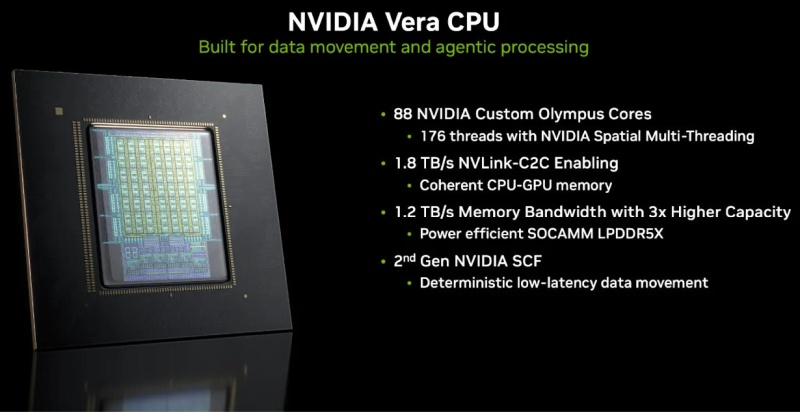
Nvidia has expanded its product lineup by offering its Vera Arm-based server processor as a standalone solution, directly targeting the established turf of Intel’s Xeon and AMD’s Epyc processors. This move signals Nvidia’s deeper commitment to the server CPU market, which has been traditionally dominated by these two industry giants.
Previously, Nvidia bundled its Vera central Arm processors together with GPUs into what it calls “superchips,” designed to deliver combined CPU and GPU performance for data center applications. Now, the Vera processor is available separately, providing customers with a dedicated Arm CPU option for server environments without a mandatory GPU component. This diversification may appeal to enterprises seeking specialized Arm architecture without the integrated graphics processing units.
Jensen Huang, CEO of Nvidia, underscored the company’s serious ambitions in this segment during a recent interview with Bloomberg, indicating that Nvidia aims to challenge prevailing server CPU suppliers. The Vera processor represents several generations of development in Nvidia’s Arm-based chip technology and marks a strategic shift towards competing on CPU performance, not just GPU or combined superchip solutions.
The server processor market is primarily controlled by Intel’s Xeon and AMD’s Epyc families, which have led the industry with strong performance, broad ecosystem support, and extensive deployment in cloud and enterprise data centers. Nvidia’s entry with a standalone Arm processor highlights the growing appeal of Arm architectures for servers, driven by demands for power efficiency and scalable performance in cloud computing and AI workloads.
Other semiconductor companies have also pursued Arm-based server chips as the market shifts towards heterogeneous computing and specialized data center hardware. Nvidia’s introduction of Vera as an independent product could broaden options for data center operators looking to diversify their processor hardware beyond traditional x86 architectures.
Going forward, close attention will be paid to Nvidia’s rollout plans for the Vera processor, including broader availability, performance benchmarks, and ecosystem support. The company’s next steps and incremental updates will help define its competitiveness in a market where CPU innovation and integration with AI workloads are increasingly critical.
Nvidia has introduced its Vera Arm-based server processor independently, entering the market dominated by Intel Xeon and AMD Epyc.