Oracle’s Debt Challenges Threaten AI Data Center Project for OpenAI
July 21, 2026
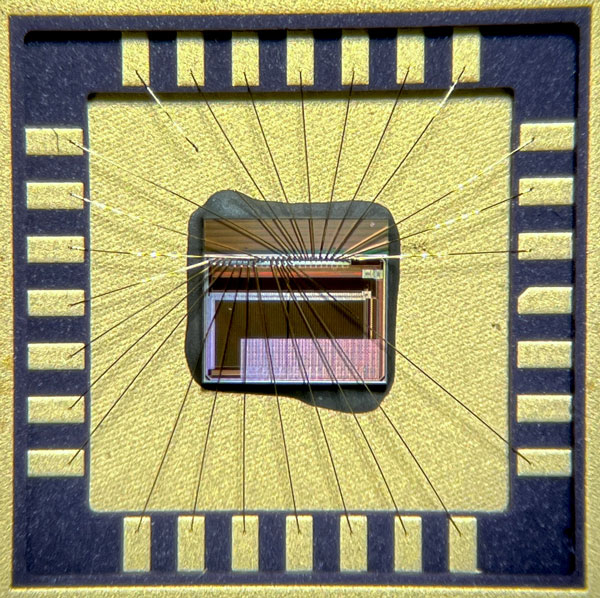
Researchers in Italy have developed a prototype analog processor capable of accelerating data processing by thousands of times compared to conventional digital solutions. This breakthrough innovation is designed to enhance performance in fields such as robotics, artificial intelligence, and big data analysis by significantly lowering energy consumption.
The newly created chip employs an analog computing approach that performs calculations directly within the processor’s memory. This architecture eliminates the need for frequent data transfers, which is a common bottleneck in traditional digital systems.
According to the developers, this innovation leads to a reduction in power consumption by as much as 5,000 times compared to digital processors carrying out similar tasks. Such efficiency gains are particularly relevant for emerging applications that require rapid processing of large datasets while managing energy costs.
The prototype is intended to address the increasing demand for more sustainable and faster computing solutions in robotics, AI models, and big data frameworks, where processing speed and low power consumption are critical factors.
Analog processors represent a shift away from the standard digital architectures by exploiting continuous signal processing, which can offer advantages in speed and efficiency for specific computational workloads.
In the broader semiconductor industry, there has been a growing interest in alternative computing paradigms, including analog, neuromorphic, and quantum approaches, aimed at overcoming the limitations of conventional digital processors.
Competitors ranging from established chipmakers to startups are exploring these emerging technologies to improve the performance-per-watt ratio demanded by future AI and data-intensive environments.
Looking ahead, the progression of this analog chip prototype will focus on further development and integration into practical applications. Monitoring its advancement could provide insights into how analog computing may complement or challenge existing digital solutions within high-performance computing sectors.
A new analog processor developed in Italy offers up to 5,000 times greater efficiency in data handling for robotics, AI, and big data applications.