Oracle’s Debt Challenges Threaten AI Data Center Project for OpenAI
July 21, 2026
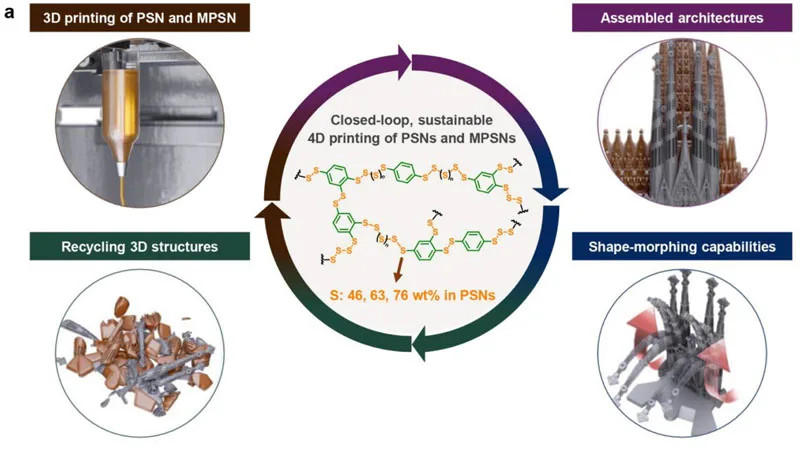
A team of researchers in South Korea has introduced an innovative 4D printing technique that transforms sulfur-based industrial waste into flexible microrobots, offering a novel approach to both waste recycling and robot manufacturing.
The newly developed process utilizes leftover sulfur from petroleum refining—a common industrial waste product—turning it into advanced materials suitable for the construction of small, adaptable robots. These microrobots are designed to be mobile and recyclable, addressing longstanding challenges related to the disposal of both industrial byproducts and spent robotic devices.
This technology simultaneously tackles multiple issues: the accumulation of sulfur waste, sourcing raw materials for robotics production, and environmentally responsible end-of-life disposal for robotic units. The flexibility inherent in the printed materials could advance robotics applications where movement and adaptability are crucial.
The research has attracted attention beyond South Korea, with financial support reportedly coming from the United States military. This interest likely stems from the potential applications of flexible, lightweight robotics in various defense and operational scenarios.
While full technical details and commercialization timelines have not been widely publicized, the approach represents a significant step forward in sustainable manufacturing practices by coupling waste reutilization with cutting-edge 4D printing technology.
As industries and militaries alike seek more sustainable and efficient solutions, this development points toward a future where waste materials serve as fundamental building blocks for next-generation robotic systems.
Researchers in South Korea created a 4D printing method that converts sulfur waste into flexible, recyclable microrobots, addressing industrial waste and robotics recycling.