
Honor Launches X7e Smartphone in Russia Featuring 7200mAh Battery and AI Shortcut Button
July 21, 2026
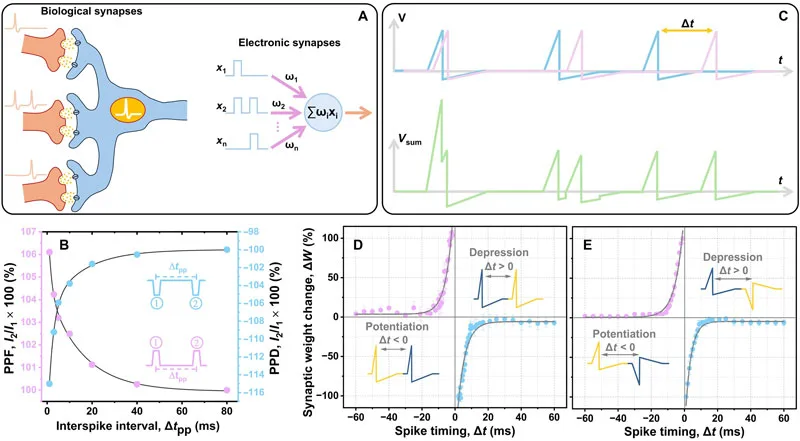
Researchers at the University of Cambridge have developed a cutting-edge nanoelectronic device inspired by the operational principles of the human brain. This breakthrough centers around a new type of memristor fabricated from a modified hafnium oxide (HfO₂) material, enhanced with strontium and titanium additives. The innovation holds promise for significantly lowering energy consumption in artificial intelligence (AI) hardware systems.
The classic memristor, a circuit element capable of mimicking synaptic functions through variable resistance states, has been an area of ongoing exploration in neuromorphic engineering. However, the Cambridge team moved beyond conventional designs by altering the material composition of the memristor’s active layer. By introducing strontium and titanium into hafnium oxide, they engineered a device that more closely replicates the analog memory behavior found in biological neural networks.
This approach aims to address the substantial energy demands typically associated with AI processing hardware. Traditional digital computing architectures struggle with power efficiency when performing tasks that mimic human cognition. The new memristor design offers a pathway for specialized hardware capable of processing information with reduced electrical consumption, potentially leading to more sustainable AI technologies.
Hafnium oxide has been a material of interest in nanoelectronics because of its stability and compatibility with current semiconductor manufacturing processes. The modifications applied by adding strontium and titanium result in improved electrical characteristics specifically suited for memory retention and analog state switching, which are essential for neuromorphic computing applications.
Beyond the potential for energy savings, the newly developed memristor shows promise as a building block for analog memory systems that could enable AI devices to operate more like the human brain, improving efficiency in learning and adaptation tasks. While detailed performance metrics and commercialization timelines have not been disclosed, this research underlines a growing trend in leveraging materials science to push the boundaries of AI hardware innovation.
The work represents a significant step toward realizing hardware that can emulate neural processing with lower energy budgets, which is crucial for future AI implementations requiring real-time decision making with minimal power. Such advancements may impact fields ranging from robotics and autonomous systems to mobile AI applications, where power efficiency remains a critical bottleneck.
As AI continues to permeate various industries, the demand for efficient and scalable hardware solutions grows. The modified hafnium oxide memristor from Cambridge embodies a promising direction in the pursuit of neuromorphic devices capable of bridging the gap between biological intelligence and silicon-based computation.
University of Cambridge scientists create a novel memristor using modified hafnium oxide to reduce AI hardware energy consumption.