Oracle’s Debt Challenges Threaten AI Data Center Project for OpenAI
July 21, 2026
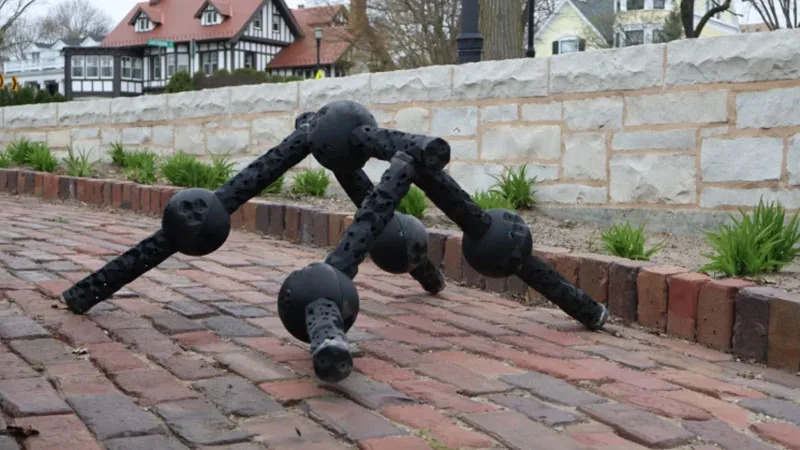
Scientists at Northwestern University in the United States have conducted groundbreaking research in the field of robotics by leveraging artificial intelligence to create a robot with extraordinary resilience. This approach diverges significantly from conventional engineering techniques, instead utilizing evolutionary algorithms to simulate natural selection and rapidly iterate over millions of design possibilities.
Traditional robot development generally requires deliberate drafting of technical specifications followed by meticulous engineering to meet those predefined goals. However, the Northwestern team adopted an AI-driven strategy that employs evolutionary algorithms to optimize robot design based on survival and performance metrics.
These algorithms mimic the biological process of evolution—involving mutation, selection, and replication—to test a vast array of robot configurations quickly. Designs that demonstrate higher survival and operational efficacy are automatically retained, while less capable iterations are discarded. This iterative trial-and-error continues until an optimal or near-optimal model emerges.
The outcome of this process is a robot that may seem simplistic or unpolished in appearance but is highly robust and nearly indestructible. Such durability stems from the AI’s ability to unearth unconventional yet highly effective design traits that human engineers might overlook or avoid due to traditional design conventions.
This research highlights the potential for AI systems not only to assist in technological innovation but to autonomously generate solutions that push the boundaries of design and durability in robotics. By harnessing the principles of natural selection through computational methods, the team has set a precedent for future explorations in autonomous robot engineering, potentially impacting fields from manufacturing automation to disaster response robots.
While detailed specifications or plans for commercialization of the robot have not been disclosed, this work illustrates a promising direction for the integration of artificial intelligence and robotics, emphasizing adaptability and endurance as key design priorities achieved through nontraditional methods.
As the robotics industry continues to evolve, approaches like this may lead to more resilient machines capable of operating in harsh environments or performing critical tasks with minimal human intervention. The ability of AI to navigate vast design spaces efficiently presents new opportunities for creating innovative technologies that combine robustness with function, potentially reshaping the future landscape of robotic applications.
Researchers at Northwestern University used AI-based evolutionary algorithms to design a durable robot through natural selection-inspired processes.