Oracle’s Debt Challenges Threaten AI Data Center Project for OpenAI
July 21, 2026
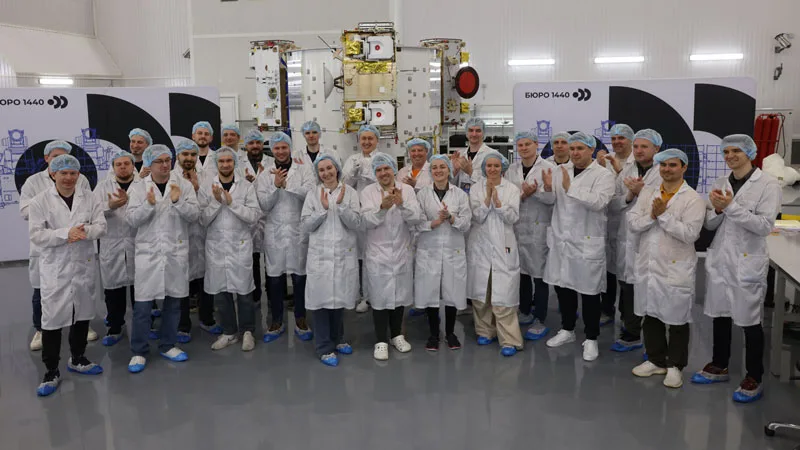
On March 23, 2026, Russian aerospace firm Bureau 1440, part of the IKS Holding group, successfully launched the initial batch of their low Earth orbit (LEO) communications satellite constellation known as “Rassvet.” The deployment marks a significant milestone in Russia’s efforts to establish a domestic alternative to global satellite internet services.
The launch was executed using a Soyuz-2.1b carrier rocket, which lifted off at 20:24 Moscow Standard Time. A total of 16 satellites were transported into orbit in this first group, achieving a preliminary orbital insertion. The satellites separated from the launch vehicle as planned and were subsequently brought under control by Bureau 1440’s Flight Control Center.
The Rassvet project is intended to expand Russia’s presence in the rapidly growing sector of low Earth orbit communication networks, which provide broadband connectivity through constellations of small satellites orbiting the planet. While details concerning the specific capabilities or future deployment plans for Rassvet satellites have not been disclosed, the program aligns with broader national interests in securing independent space-based telecommunications infrastructure.
Bureau 1440’s role as a subsidiary of IKS Holding highlights the increasing engagement of private and semi-private aerospace entities within Russia’s space strategy. The use of the reliable Soyuz-2.1b launch vehicle underscores continuity in Russian launch technology to support both government and commercial missions.
This inauguration flight paves the way for subsequent satellite deployments that will aim to enhance the coverage and performance of the Rassvet network. Experts anticipate that incremental launches will gradually establish a more comprehensive constellation capable of supporting diverse communications applications.
The successful orbital insertion and control acquisition of all 16 satellites represent an important technical validation for the Rassvet system’s initial phase. Continuous monitoring and management from the Flight Control Center will be critical in optimizing operational parameters and ensuring the satellites’ functionality in orbit.
As global demand for high-speed satellite internet expands, Russia’s move to develop its own LEO communications constellation follows similar initiatives worldwide, reflecting the strategic value placed on domestic connectivity solutions and space technology autonomy.
Russian aerospace company Bureau 1440 deploys first group of 16 ‘Rassvet’ low Earth orbit communication satellites via Soyuz-2.1b rocket.