Honor Launches X7e Smartphone in Russia Featuring 7200mAh Battery and AI Shortcut Button
July 21, 2026
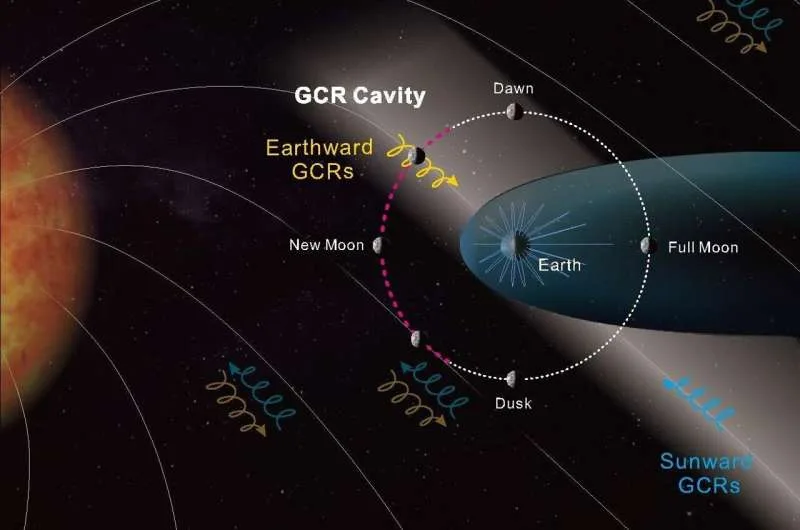
Data gathered by radiation sensors aboard China’s Chang’e-4 lunar lander has provided new evidence on the interaction between Earth’s magnetic field and radiation levels on the Moon. Contrary to the long-standing belief that the Moon remains largely unprotected by Earth’s magnetosphere, recent findings indicate that Earth’s magnetic field occasionally offers some degree of radiation shielding near the lunar surface.
It has been widely understood that Earth’s magnetosphere does not envelop the Moon, leaving the lunar surface continuously exposed to harsh cosmic and solar radiation. However, observations made with the radiation detectors on the Chang’e-4 lander challenge this idea by showing periods during which the Moon benefits from protective effects linked to Earth’s magnetic environment.
These protective episodes suggest that dynamic phenomena within Earth’s magnetosphere can create temporary “windows” of reduced radiation exposure. Such intervals occur when the magnetic field lines and plasma environments temporarily extend farther into space, reaching the vicinity of the Moon and diminishing the radiation intensity at the lunar surface.
This nuanced understanding highlights that the Moon’s radiation environment is not a constant state of full exposure but is influenced by space weather conditions affected by Earth’s magnetic activity. This insight could provide important context for future crewed and robotic missions, as radiation is one of the major challenges for sustaining human activities on the Moon.
The possibility of natural, albeit variable, radiation mitigation mechanisms near the Moon opens avenues for further scientific investigation into space weather interactions and could inform the design of protective strategies for lunar exploration infrastructure.
While these findings do not imply continuous protection for the Moon, they mark a significant update to scientific models of how Earth’s magnetosphere behaves in relation to its natural satellite. Ongoing analysis of data from Chang’e-4 and other missions will help clarify the frequency and strength of such protective intervals and their implications for lunar science and exploration.
Chinese lunar lander data shows Earth’s magnetic field provides occasional radiation protection to the Moon, challenging previous assumptions.