Honor Launches X7e Smartphone in Russia Featuring 7200mAh Battery and AI Shortcut Button
July 21, 2026
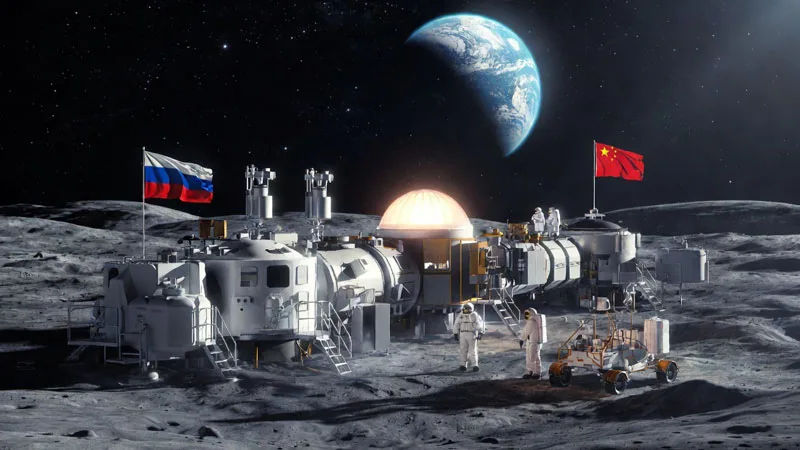
The Russian Academy of Sciences (RAS) has officially approved the concept for the Russian national segment of the International Lunar Research Station (ILRS), a collaborative space infrastructure project led by China. This endorsement marks a significant step forward in the ongoing partnership between Russia and China to establish a permanent human presence and scientific outpost on the Moon.
The launch of the initiative traces back to a bilateral agreement signed in December 2022 between the Russian space agency, Roscosmos, and China. Since then, the project has grown, attracting the participation of thirteen additional countries interested in contributing to lunar research and exploration efforts.
China will serve as the primary driving force behind the ILRS, providing much of the core infrastructure and operational oversight. Russia’s primary contribution is expected to include the development and deployment of a nuclear power station on the lunar surface, a critical technology to support long-duration missions with reliable energy supply.
The concept approved by the Russian Academy of Sciences outlines the technical and scientific framework for the Russian segment, emphasizing collaboration across multiple disciplines ranging from lunar geology to astrobiology and engineering systems. This segment will integrate with broader international components to form a unified lunar base.
By establishing this dedicated Russian component, the partnership underscores Moscow’s commitment to reasserting its presence beyond Low Earth Orbit while fostering international cooperation in space exploration. The collaboration aligns with both nations’ strategic interests in advancing lunar science and technology using shared resources and infrastructure.
While details such as project timelines, specific mission architectures, and funding arrangements have yet to be fully disclosed, the approval by the Russian Academy signals strong institutional support for Russia’s role in the ILRS program.
As the global space community increasingly turns its attention to sustainable lunar activities, the ILRS represents a multi-national effort designed to support ongoing scientific investigations, technology demonstrations, and eventual human colonization efforts on the Moon.
The initiative builds upon the growing precedent of international partnerships in space exploration, providing an alternative to purely domestic or bilateral projects by involving a consortium of countries under the leadership of China and Russia.
Further updates on the development and deployment of the ILRS and its constituent national segments are expected as this ambitious lunar project progresses through design and testing phases in the coming years.
The Russian Academy of Sciences has approved the concept for Russia’s segment of the joint lunar research station with China, expanding international collaboration.