Oracle’s Debt Challenges Threaten AI Data Center Project for OpenAI
July 21, 2026
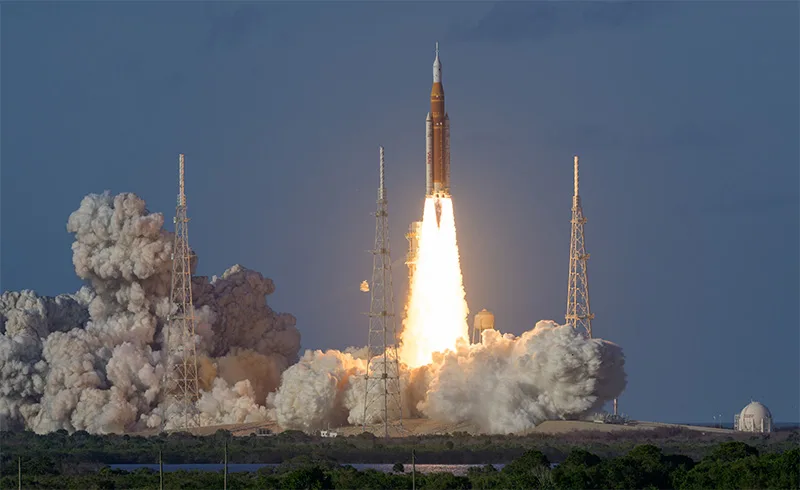
On April 1, 2026, the long-anticipated Artemis II mission commenced with the launch of NASA’s heavy-lift Space Launch System (SLS) rocket from the historic Launch Complex 39B at Kennedy Space Center in Florida. This mission marks the first time astronauts will travel aboard the SLS rocket and the Orion spacecraft, initiating a new era in human space exploration.
The countdown culminated at 6:24 p.m. local time as the massive SLS rocket soared skyward, carrying the crewed Orion capsule on a journey to the Moon. This mission represents a significant milestone, being the first crewed lunar mission to depart Earth in over fifty years since Apollo 17.
Artemis II is part of NASA’s broader Artemis program, designed to establish a sustainable human presence on the Moon and pave the way for future deep-space missions. The combination of the SLS rocket’s unprecedented thrust capacity and the Orion spacecraft’s advanced life support systems enable astronauts to safely travel farther than ever before.
The launch site itself holds a storied place in space history, having supported numerous Apollo missions that first took humans to the lunar surface. This mission not only revives the legacy of these historic flights but also demonstrates significant advancements in rocket and spacecraft technology developed over the past several decades.
While specific mission objectives focus on crewed lunar orbit and the testing of systems critical for future Moon landings, Artemis II also serves as a crucial step toward the goal of sending humans to Mars and beyond. These efforts underscore NASA’s commitment to expanding human presence in space and fostering international collaborations for science and exploration.
The successful liftoff of Artemis II signals renewed momentum in the US space program, reaffirming NASA’s role as a leader in crewed spaceflight and advancing lunar exploration infrastructure. This mission sets the stage for upcoming Artemis missions that will ultimately return astronauts to the lunar surface and contribute to sustained human activity on the Moon.
NASA’s Artemis II mission launched with the Space Launch System and Orion spacecraft, sending astronauts back to the Moon for the first time since 1972.