Advancements in CFET Technology Promise Faster, Smaller, and More Reliable Semiconductor Transistors
July 21, 2026
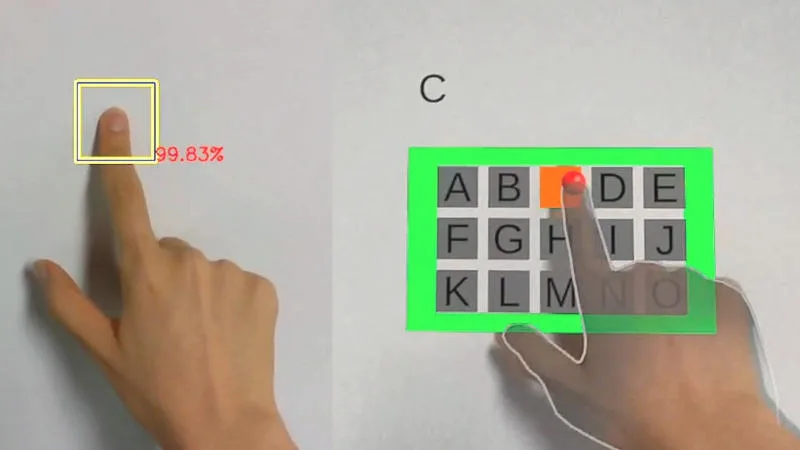
Scientists have devised a novel way to convert any hard surface into an interactive sensor panel by leveraging a natural response of the human body. When a person presses their fingertips against a solid surface, the skin temporarily pales or blanches due to reduced blood flow. This subtle physiological change has been harnessed as a new method for enabling touch input on various surfaces without the need for additional hardware.
This discovery opens fresh possibilities for augmented reality (AR) technologies, which rely heavily on intuitive user interaction. By detecting the blanching effect on fingertips, AR systems can recognize touch input almost anywhere, turning everyday objects and surfaces into functional control panels.
Traditional touch interfaces typically require specialized screens or devices embedded with sensors to register input. The new approach bypasses these requirements by using the body’s natural response as a signal. This could significantly simplify the integration of user interfaces into different environments, enhancing flexibility and accessibility.
Potential applications extend beyond AR to include wearable technologies and gesture recognition systems, where minimizing hardware bulk is critical. This technique could also improve interaction in situations where conventional touchscreens are impractical or unavailable.
Details on the technical implementation and detection mechanisms were not disclosed, but the concept leverages optical or sensor-based detection to identify the blanching of the skin in response to pressure. Future advancements may focus on optimizing sensitivity and speed to provide a seamless user experience.
By transforming common surfaces into interactive panels without added sensors, this approach signals a meaningful step forward in human-computer interaction. It underscores the potential of using biological signals as input mechanisms to create more natural and integrated user interfaces.
While the research is still emerging, the fingertip blanching method presents an innovative direction for AR developers and technology designers seeking novel ways to enhance device interactivity and user engagement.
Researchers use fingertip blanching to transform ordinary surfaces into interactive touch panels for augmented reality systems.