App Store Sees Surge in New Apps Amid Growth of No-Code Platforms in Early 2026
July 21, 2026
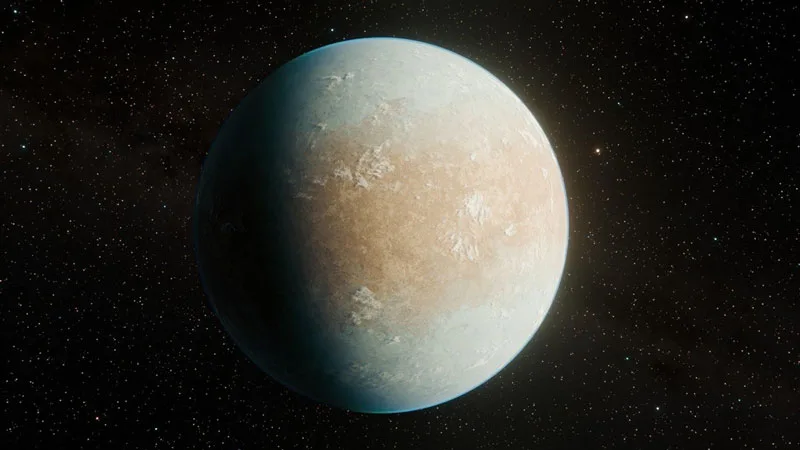
An international team of astronomers has identified a new exoplanet candidate that shares several physical and orbital characteristics with Earth. This discovery adds to the growing list of planets with potential Earth similarities beyond our solar system.
The planet’s mass, size, and orbital path align closely with those of Earth, making it one of the more promising Earth analogs discovered so far. Due to these comparable parameters, it has been tentatively described as an Earth twin, though this designation comes with some caveats.
Notably, the exoplanet experiences average temperatures significantly lower than those found on Mars, indicating a colder environment than what is typically associated with Earth-like planets. While this chilly climate presents challenges for the potential of life as we know it, the temperature range is reminiscent of Earth’s coldest regions, comparable to the harsh winters experienced in areas such as Yakutia.
The finding underscores the diversity of planets in the galaxy, illustrating that Earth-like properties in terms of size and orbit do not necessarily guarantee Earth-like environmental conditions. Despite the lower temperatures, this exoplanet adds valuable data for studying planetary climates and habitability.
Further observations and research will be needed to better understand the atmosphere, surface conditions, and overall environment of this distant world. Such information could provide insight into the formation of Earth analogs and the range of conditions they might host.
This discovery highlights the ongoing advancements in exoplanet detection and characterization, propelled by international collaboration and increasingly sophisticated observational technologies.
A newly found exoplanet resembles Earth in size and orbit but has a much colder climate, colder on average than Mars.