Thermalright Introduces Royal Pretor 130 Vision Cooler with Integrated 3.95-Inch Color Display
July 21, 2026
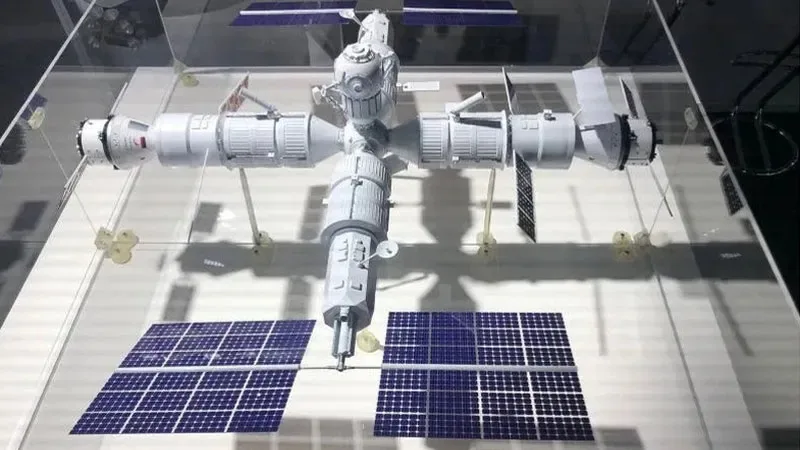
At the recent “Team of the Future” forum held during the “Space Week 2026” event, key details emerged regarding Russia’s plans for its next-generation orbital infrastructure. Vladimir Kozhevnikov, the chief designer and deputy chief engineer at RKK Energia, provided an update on the development timeline of the Russian Orbital Station (ROS).
Kozhevnikov affirmed that the complete configuration of the ROS is expected to be assembled in Earth’s orbit by the year 2034. This milestone will mark a significant advancement in Russia’s space capabilities, following initial phases of station deployment that have been underway.
The Russian Orbital Station represents a strategic step for the country’s long-term human spaceflight ambitions, offering a modular and expandable platform to support various scientific, technological, and potentially commercial activities in orbit. The project continues to be managed by RKK Energia, which has a historical role in the construction and operation of other major space infrastructure.
More specific details regarding the technical features, the number of modules planned, or the timeline for individual launches have not been publicly disclosed. However, the indication that the station will reach its full scope by 2034 provides a clearer framework for Russia’s planned presence in low Earth orbit over the coming decade.
The statement came amid wider discussions at the forum dedicated to the future of Russia’s space sector, emphasizing the technological development and human capital required to realize such ambitious projects. The ROS is intended not only to serve scientific purposes but also to enhance Russia’s autonomy in orbital operations and strengthen its role within international space activities.
This announcement arrives at a time when spacefaring nations are increasingly focused on next-generation orbital platforms, with several projects aiming to replace or complement the International Space Station (ISS) as it approaches the end of its operational lifetime.
Russia’s commitment to advancing its orbital station underscores ongoing investment in the aerospace sector while highlighting the continued importance of space infrastructure for scientific research, national security, and technological innovation.
Russia aims to complete the full configuration of its new orbital station in space by 2034, according to a leading project official.