Honor Launches X7e Smartphone in Russia Featuring 7200mAh Battery and AI Shortcut Button
July 21, 2026
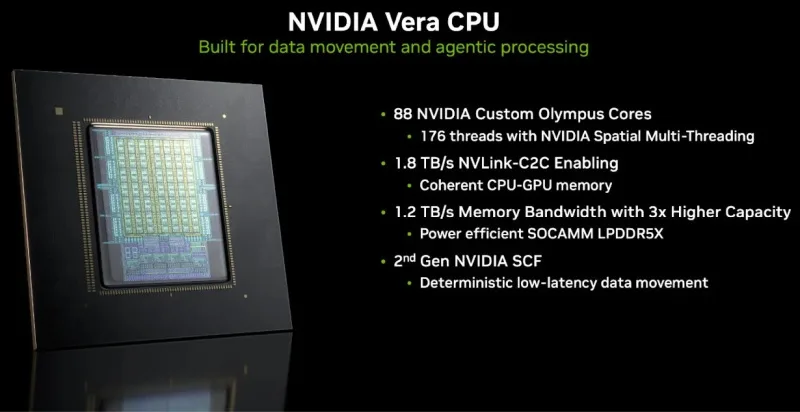
In the midst of a global surge in artificial intelligence development, a number of European startups are positioning themselves as challengers to Nvidia’s dominance in AI chip technology. These companies are developing specialized chips that they claim offer efficiency gains up to 100 times greater than Nvidia’s current GPU-based solutions for machine learning inference tasks.
Unlike Nvidia’s graphics processing units, which were initially designed for rendering and later adapted to AI workloads, the European startups focus on creating purpose-built hardware engineered from the ground up for AI inference. This approach allows them to optimize performance and power consumption far beyond the capabilities of general-purpose GPUs.
According to developers within these startups, their new architectures leverage innovative designs and emerging semiconductor technologies to achieve significant breakthroughs in computational efficiency. Such advances could potentially transform AI deployment by enabling faster processing with reduced energy consumption, a major benefit for both data centers and edge computing environments.
However, despite the promising technical prospects, these startups are encountering considerable obstacles that threaten their ability to scale and compete effectively on a global level.
One core challenge involves funding; the European venture capital and public investment landscape provides less access to capital compared to the United States and Asia, where AI chip companies have attracted vast investments. Without sufficient financial support, many of these European ventures struggle to advance beyond prototype phases or to ramp up commercial production.
Another critical hurdle lies in semiconductor manufacturing capacity. Europe’s ecosystem for semiconductor fabrication is relatively limited, with a shortage of state-of-the-art foundries able to produce advanced AI chips at scale. This lack means startups must either rely on external partners overseas or face higher costs and delays in bringing products to market.
These constraints highlight a broader issue in the technology supply chain within Europe, where chipmakers and related industries have historically had a smaller footprint compared to dominant players in the US and East Asia. Addressing this gap requires concerted efforts involving increased investments, strategic partnerships, and policy support to expand fabrication infrastructure and financial resources dedicated to AI hardware innovation.
While the ambition and early results from these European startups underscore the continent’s potential to contribute meaningfully to the future of AI hardware, realizing that potential hinges on overcoming systemic challenges in funding and manufacturing. How the European technology sector navigates these issues will be critical in defining its role in the increasingly competitive global AI chip market.
European startups claim AI chips 100 times more efficient than Nvidia’s but struggle with limited funding and semiconductor fabrication capacity.