
Oracle’s Debt Challenges Threaten AI Data Center Project for OpenAI
July 21, 2026
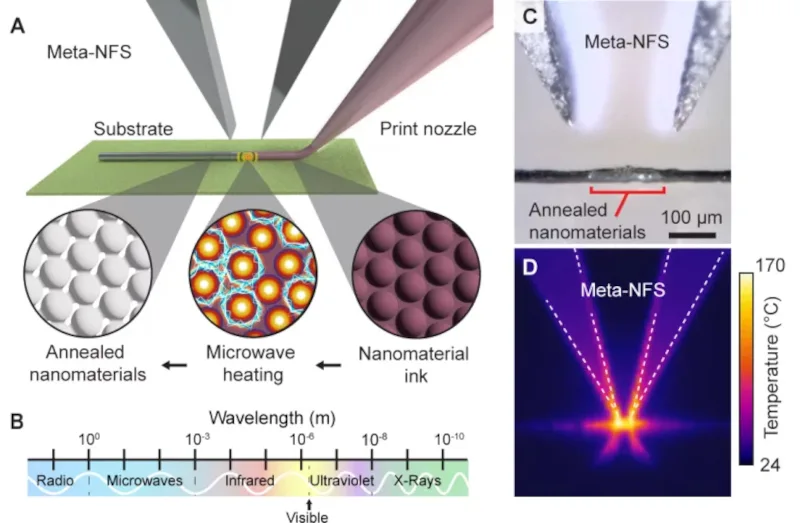
Researchers at Rice University have engineered a novel device designed to print conductive electronics directly onto living tissues, bones, and surgical implants with minimal surface damage. This advancement offers new potential for seamless integration of bioelectronics in medical applications.
The innovative device, referred to as M**a-NFS, leverages microwave energy to sinter conductive inks precisely onto biological substrates. It channels approximately 79.5% of the microwave power into the target material, a notable improvement over conventional probes, which deliver only about 8.5% efficiency.
By focusing energy within an area smaller than 200 micrometers, the device ensures a highly localized application that avoids widespread thermal damage to the surrounding tissues or implant surfaces. This precision is critical when working with delicate living matter where traditional sintering techniques could cause irreparable harm.
Printing electronics on biological tissues and implants opens pathways for sophisticated biomedical devices that can monitor health, support healing processes, or provide enhanced interfaces for implants. The ability to print conductive pathways directly onto the surface of living tissue or surgical tools could transform how medical devices are fabricated and integrated into the human body.
While specific details on commercialization or clinical deployment are yet to be disclosed, the device represents a significant leap in biofabrication technology. Its enhanced energy transfer capability and precision micro-focusing stand to benefit a broad range of medical engineering disciplines, promising improved patient outcomes and more advanced medical implant designs.
Rice University researchers developed a device that prints conductive ink on living tissues and implants without harming their surfaces.