Oracle’s Debt Challenges Threaten AI Data Center Project for OpenAI
July 21, 2026
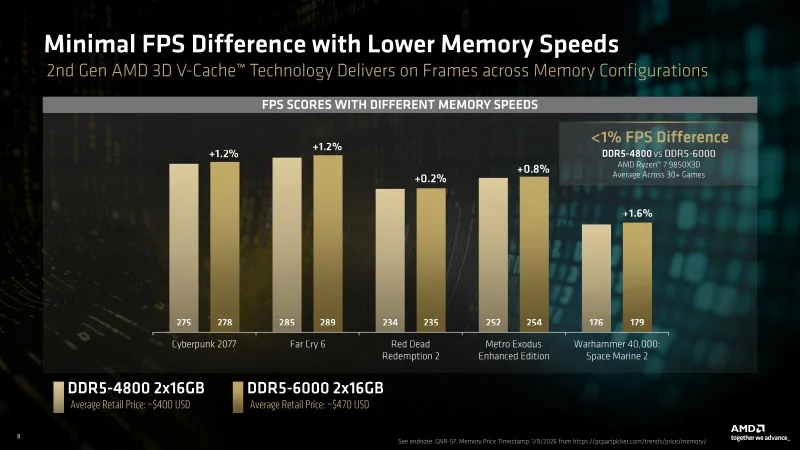
AMD’s Ryzen X3D processors have introduced a new discussion around memory investment strategies, particularly with DDR5 technology’s elevated costs. The company suggests that users can opt for more affordable memory kits without sacrificing overall system performance, presenting a potential saving opportunity in an era of premium pricing for DDR5 modules.
To explore this claim, a recent analysis put various DDR5 memory configurations to the test, encompassing five budget-friendly kits operating at speeds of DDR5-4800, DDR5-5200, and DDR5-5600. These were then directly compared against a higher-end DDR5-6000 CL26 kit, widely recognized as a top-tier option optimized for Ryzen processors.
The evaluation aimed to determine whether the cost savings on more modest kits translate into noticeable compromises in performance when paired with Ryzen X3D CPUs. The potential impact is significant given the premium attached to current DDR5 memory pricing, which has been a growing consideration for both enthusiasts and mainstream users aiming to optimize system builds.
Performance metrics focused on key tasks and benchmarks where memory speed and latency directly influence responsiveness and overall throughput. By testing across a range of speeds and latency timings, the study sought to offer insights on the practical trade-offs when selecting budget versus premium DDR5 modules for these advanced processors.
The overarching question was whether Ryzen X3D’s architecture, with its 3D V-Cache enhancement, inherently reduces dependency on extreme memory speeds, thus enabling effective use of slower, less expensive DDR5 kits without notable performance loss. This would challenge long-held assumptions that higher memory frequencies are imperative for achieving peak performance on Ryzen platforms.
While detailed performance data and specific metrics were not disclosed, the analysis highlights that budget DDR5 modules at speeds between DDR5-4800 and DDR5-5600 could offer a viable alternative to premium DDR5-6000 CL26 memory for users focused on balancing cost and performance. This assessment supports AMD’s proposition but also indicates that the choice of memory should consider workload specifics and user priorities.
For consumers and system builders navigating the ongoing transition to DDR5 and the evolving Ryzen X3D landscape, these findings present a valuable perspective. Investing in top-tier DDR5 memory may not always translate into proportional performance improvements, particularly with processors designed to optimize cache and mitigate memory bottlenecks.
Ultimately, this comparison provides an important reference point when configuring Ryzen-based systems, especially given the fluctuating costs and wide selection of DDR5 memory modules available in the market. Users can make more informed decisions about where to allocate budget resources, potentially reallocating saved funds towards other system upgrades or components.
The detailed exploration underscores the nuanced interplay between processor architecture and memory performance, affirming that practical benefits from high-end memory are workload-dependent. As DDR5 continues to mature and prices stabilize, balancing capacity, speed, latency, and cost remains a key strategy for optimizing Ryzen computing experiences.
AMD claims Ryzen X3D processors can reduce memory costs without performance loss. This analysis compares budget DDR5 kits with a premium DDR5-6000 CL26 kit.