App Store Sees Surge in New Apps Amid Growth of No-Code Platforms in Early 2026
July 21, 2026
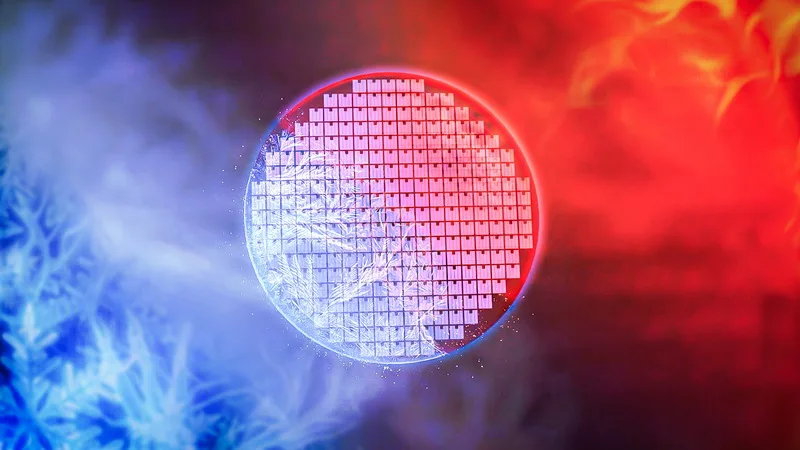
Scientists at King Abdullah University of Science and Technology (KAUST) have uncovered remarkable properties in gallium oxide-based semiconductor devices, revealing their capability to operate at temperatures colder than those found in the vacuum of outer space. This discovery opens up new possibilities for electronics subjected to extreme cold conditions.
The ability of gallium oxide semiconductors to perform reliably in ultra-low temperature environments positions them as strong candidates for various cutting-edge applications. Notably, areas such as quantum computing, which require operation in cryogenic environments, could benefit from such materials. Additionally, these semiconductors hold promise for use in space exploration, where electronics must endure the harsh thermal conditions beyond Earth’s atmosphere.
Traditional semiconductor materials often face performance degradation when exposed to extremely cold temperatures, limiting their use in outer space and other ultra-cold environments. However, the findings from KAUST’s research indicate that gallium oxide-based components maintain functional integrity at temperatures even lower than the thermal conditions typically present in open space. This resilience is attributed to the unique physical and electronic characteristics of gallium oxide as a semiconductor.
The study highlights the potential for gallium oxide materials to enhance the durability and efficiency of devices operating in environments where managing temperature extremes is critical. This could lead to advancements not only in quantum information systems but also in the design of spacecraft electronics, sensors, and other instruments exposed to space’s formidable thermal challenges.
While the research primarily focuses on the fundamental properties of gallium oxide, its implications extend to numerous technological fields that depend on robust semiconducting materials capable of withstanding severe cold. Future development and commercialization of these devices will rely on further investigation into integration techniques and long-term reliability under operational conditions.
This breakthrough contributes to the growing body of work aimed at improving electronics for applications beyond terrestrial limits, offering a pathway to more dependable and efficient devices in extreme environments.
KAUST researchers find gallium oxide semiconductors function effectively at temperatures colder than those in outer space.