Thermalright Introduces Royal Pretor 130 Vision Cooler with Integrated 3.95-Inch Color Display
July 21, 2026
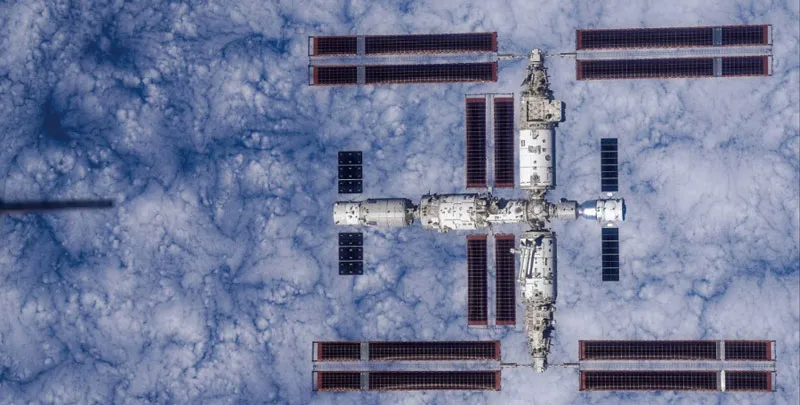
As NASA advances plans to deorbit and sink the International Space Station (ISS) later this decade, China is moving swiftly to expand its Tiangong space station. The expansion will increase the station’s size more than twofold, securing its presence as the lone operational modular outpost in low Earth orbit following the ISS retirement.
The ISS has served as a multinational orbital laboratory for over two decades, but it approaches the end of its service life. With NASA focused on safely phasing out this aging orbiting complex, China’s efforts to scale up Tiangong are gaining international attention. The Chinese space agency’s expansion project targets completion around 2031, the approximate timeline when the ISS is expected to be deorbited.
This ambitious build-out will not only increase Tiangong’s physical dimensions significantly but also boost its capabilities for scientific research and long-duration missions. The expanded station is anticipated to house additional modules, enabling China to conduct more complex experiments and accommodate larger crews in orbit.
China’s investment appears aimed at consolidating its leadership in low Earth orbit infrastructure during a transitional period for global space operations. With the ISS set to conclude its mission in the early 2030s, Tiangong will exist as the sole continuously crewed space station for at least a period.
While details such as expansion module specifications, assembly schedules, and mission scope remain under careful development, the trajectory is clear. Beijing’s strategy will ensure a sustained Chinese presence in space, capitalizing on the vacuum that the ISS’s retirement will create.
China’s growing orbital infrastructure reflects broader ambitions in space science, exploration, and international cooperation. It aims not only to support its own astronauts but also to potentially welcome international partners to conduct collaborative research onboard Tiangong.
The transformation of Tiangong into a substantially larger and more capable outpost marks a new chapter in space station operations. This development signals a shift in the orbiting landscape, with China increasingly positioned as a key player in sustaining human activity in low Earth orbit.
China is set to more than double the size of its Tiangong space station, positioning it as the sole low Earth orbit outpost after the ISS is decommissioned.