Oracle’s Debt Challenges Threaten AI Data Center Project for OpenAI
July 21, 2026
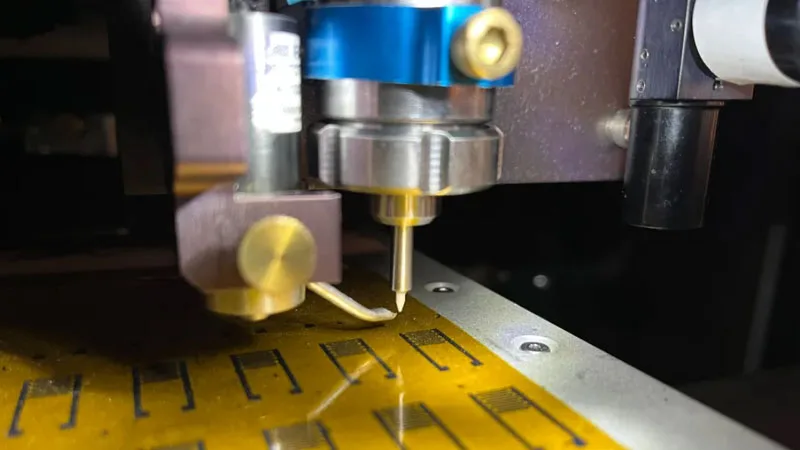
Scientists at Northwestern University have achieved a milestone in neuroengineering by developing artificial neurons through advanced printing techniques. These lab-engineered neurons are capable of communicating directly with living brain cells by producing electrical signals that mimic the precise temporal and structural characteristics of natural neural impulses.
The breakthrough facilitates not only imitation of biological functions but also the establishment of real-time interaction between synthetic neural devices and the human brain. This capability represents a significant step forward in creating seamless brain-computer interfaces.
The artificial neurons designed by the Northwestern team replicate authentic neural signaling patterns, allowing living neurons to perceive these signals as if originating from within the brain itself. This compatibility opens new pathways for the development of neuromorphic computers, which emulate the brain’s architecture and operational principles in hardware.
By enabling direct bidirectional communication between human neural tissue and synthetic constructs, these printed neurons could become foundational components for advanced neuroprosthetics, adaptive brain-machine interfaces, and smarter AI systems modeled on biological cognition.
The printing approach enables scalable fabrication of artificial neurons, potentially accelerating research and application in neural repair, augmentation, and computing technologies inspired by organic brain networks. While further studies are necessary to validate long-term integration and functional outcomes in living subjects, this achievement marks an important convergence of materials science, electronics, and neuroscience.
Details regarding the exact materials, printing methods, and comprehensive device specifications have not been disclosed. However, the initial findings indicate strong prospects for leveraging bioelectronic interfaces to bridge biological and artificial intelligence.
Engineers at Northwestern University created printed artificial neurons that generate bio-identical signals, enabling direct interaction with living brain cells.