App Store Sees Surge in New Apps Amid Growth of No-Code Platforms in Early 2026
July 21, 2026
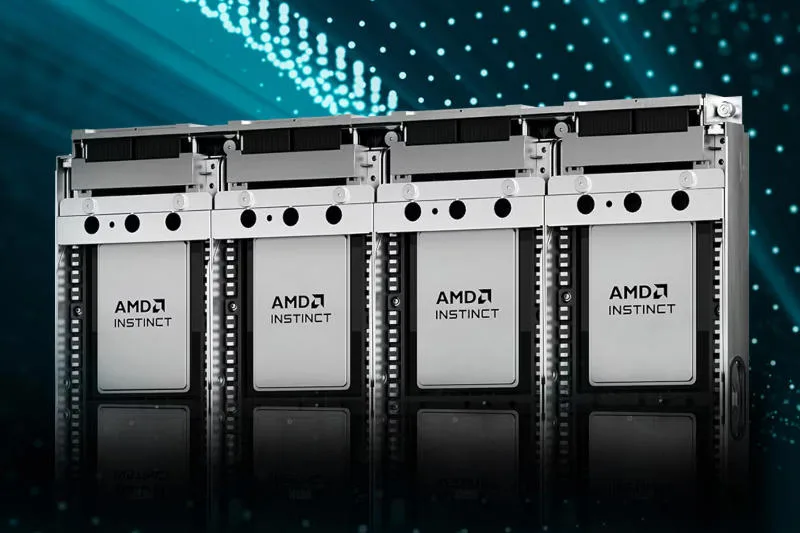
AMD has introduced the Instinct MI430X accelerator, a new addition to its line of high-performance computing hardware. Uniquely positioned for scientific and technical applications, the MI430X stands out for delivering considerably higher computing power in areas requiring double-precision calculations, such as scientific research and modeling, rather than being designed for artificial intelligence (AI) tasks.
The Instinct MI430X demonstrates remarkable speed, reportedly achieving performance levels up to six times greater than Nvidia’s Rubin accelerator. This significant advantage is attributed to AMD’s focus on high-precision workloads typical in High-Performance Computing (HPC) domains. Unlike many contemporary accelerators optimized for AI and machine learning workloads, which often rely on single or mixed precision calculations for neural network training and inference, the MI430X emphasizes double-precision floating-point computations. This makes it particularly well-suited for simulations, scientific modeling, and other compute-intensive research tasks where accuracy is paramount.
AMD’s decision to steer the MI430X away from direct AI acceleration underscores the growing differentiation within the accelerator market, where distinct architectures cater to specialized computational requirements. The MI430X aims to meet the rising demands from scientific institutions, engineering firms, and research organizations that depend on precise computational results rather than rapid AI model training.
While specific details such as pricing, full technical specifications, and availability timelines have not been disclosed, the introduction of the Instinct MI430X signals AMD’s continued investment and innovation within the HPC sector. This also aligns with broader industry trends where hardware manufacturers are diversifying their products to address niche computing needs beyond the dominant AI focus.
By offering a product that substantially outperforms Nvidia’s Rubin in double-precision tasks, AMD may influence purchasing decisions in environments where simulation accuracy and computational rigor are critical. Although AI remains a major market driver, HPC applications continue to sustain significant demand for specialized accelerators tailored to their unique precision-centric workloads.
Overall, the AMD Instinct MI430X represents a strategic move to strengthen the company’s foothold in scientific computing segments, addressing a clear need for powerful and accurate computing resources capable of handling complex computational challenges beyond AI.
AMD unveils Instinct MI430X accelerator achieving six times Nvidia Rubin’s speed, targeting high-performance computing over AI workloads.