Nvidia GPUs Can Report Individual GDDR6 and GDDR6X Memory Chip Temperatures, Enthusiasts Discover
July 19, 2026
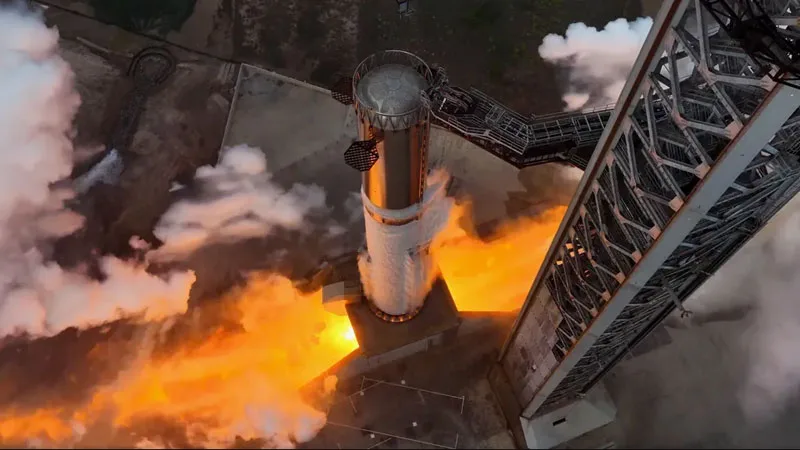
SpaceX has reached a significant milestone in the development of its next-generation Super Heavy booster, the essential first stage of the Starship launch system. This key advancement comes after the company successfully completed a full static fire test involving all 33 of the newly upgraded Raptor 3 engines simultaneously on the Super Heavy V3 variant.
The test took place at SpaceX’s launch facility in Texas, where the booster was firmly secured to the launch mount. During the static fire, the engines ignited and operated at full thrust for the expected duration without the booster lifting off the pad. This comprehensive exercise validated the performance and integration of the upgraded propulsion system under conditions closely simulating an actual launch.
The static fire test marks a crucial phase in SpaceX’s preparation process for launching the updated Starship configuration that incorporates the Super Heavy V3 booster. Verified full-thrust ignition of all 33 Raptor 3 engines reflects progress toward ensuring launch reliability and meeting the demanding requirements of the Starship program.
The Super Heavy booster serves as the powerful first stage in the Starship launch architecture, providing the extensive lift capacity needed to propel the spacecraft out of Earth’s atmosphere. The upgraded booster version features the latest generation of Raptor engines, which represent significant advancements over previous engine iterations used on earlier boosters.
Successful static fire tests are an industry-standard method of assessing rocket engine performance, structural integrity, and system coordination before committing to an actual flight attempt. It allows engineers to monitor engine behavior under controlled yet rigorous conditions and to make any necessary adjustments ahead of the booster’s maiden launch.
SpaceX’s Starship system is designed to support a range of future missions, including crewed flights to the Moon, Mars, and beyond, as well as satellite deployment and point-to-point Earth transport. Achieving reliable operation of the Super Heavy booster is essential for realizing the full capabilities of the Starship vehicle.
While specific information regarding the schedule for the first flight of Starship with the Super Heavy V3 booster has not been disclosed, this series of engine tests signifies a major step toward eventual launch readiness. SpaceX continues to develop and refine the system in preparation for demonstrating Starship’s operational capabilities and advancing its ambitious space exploration goals.
SpaceX successfully conducted a full static fire test of all 33 Raptor 3 engines on its new Super Heavy booster, advancing Starship V3 preparations.