Memory Chip Makers Face Potential DRAM Oversupply by 2028 Amid Massive Capacity Expansions
July 20, 2026
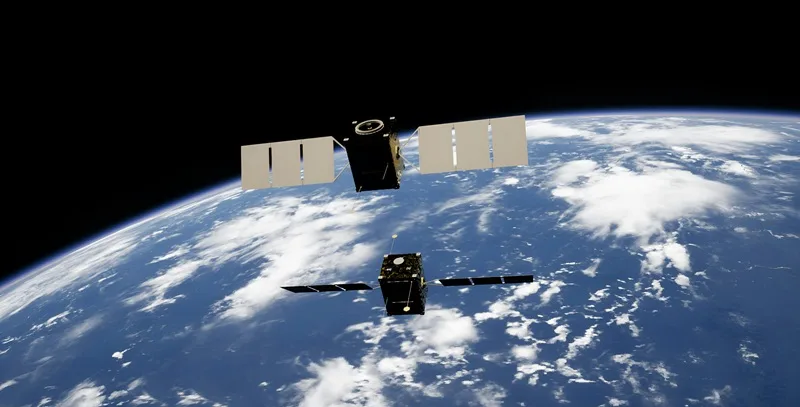
Shanghai Xingshu Tiansuan Space Technology, a subsidiary of Junda Shares, has taken a significant step in space technology by launching the initial batch of satellites aimed at creating a space-based computing network. The announcement, made on Saturday and reported by Reuters, highlights that this Chinese company is moving ahead of Elon Musk’s competing efforts in the realm of space computing.
This pioneering constellation is planned to eventually consist of around 1,000 satellites positioned in orbit. The primary mission of these satellites will be to facilitate computational tasks from space, marking a transformative advancement in how computing resources may be deployed beyond Earth.
While the specifics regarding the satellite technology, computational capabilities, or pricing models have not yet been disclosed, the project underscores a growing trend of integrating artificial intelligence and computational platforms with satellite infrastructure. The goal is to leverage the unique environment of space to potentially enhance data processing speed, security, and global accessibility.
The ambitious scale of Shanghai Xingshu Tiansuan’s proposed constellation positions the company at the forefront of space computing innovation. Although numerous companies are exploring satellite constellations for communications and earth observation, deploying satellites explicitly designed for computation represents a novel approach.
This advancement reflects the broader strategic efforts by China to invest heavily in cutting-edge aerospace technologies and digital infrastructure. The integration of computation into satellite networks may open new paradigms for handling massive data sets, running complex algorithms, and supporting AI applications with low latency and high reliability worldwide.
Elon Musk’s SpaceX, often recognized for its Starlink communications constellation, has also signaled intentions to integrate computing capabilities into its space infrastructure. Shanghai Xingshu Tiansuan’s recent launch marks a notable milestone in this competitive and rapidly evolving sector, showing that Chinese firms are accelerating development and deployment timelines.
The deployment of a thousand satellites for this purpose presents considerable technical challenges, from orbital management to power consumption and heat dissipation in a space environment. Success in overcoming these will potentially lay the foundation for future distributed space-based data centers and a new chapter in cloud computing technology.
Details concerning the operational timeline for the full deployment or the exact nature of the computations intended for these satellites remain undisclosed. Industry observers will be watching closely to see how this constellation evolves and what impact it may have on the global technology landscape.
As nations and private enterprises continue to vie for leadership in space technology, efforts like those of Shanghai Xingshu Tiansuan underscore the growing importance of space as a platform not just for communication and navigation, but also for advanced computing services. This development is another step forward in the ongoing race to pioneer the future of orbital infrastructure and digital connectivity.
Shanghai Xingshu Tiansuan deploys initial satellites for a planned 1,000-unit space computing constellation, predating Elon Musk’s efforts.